



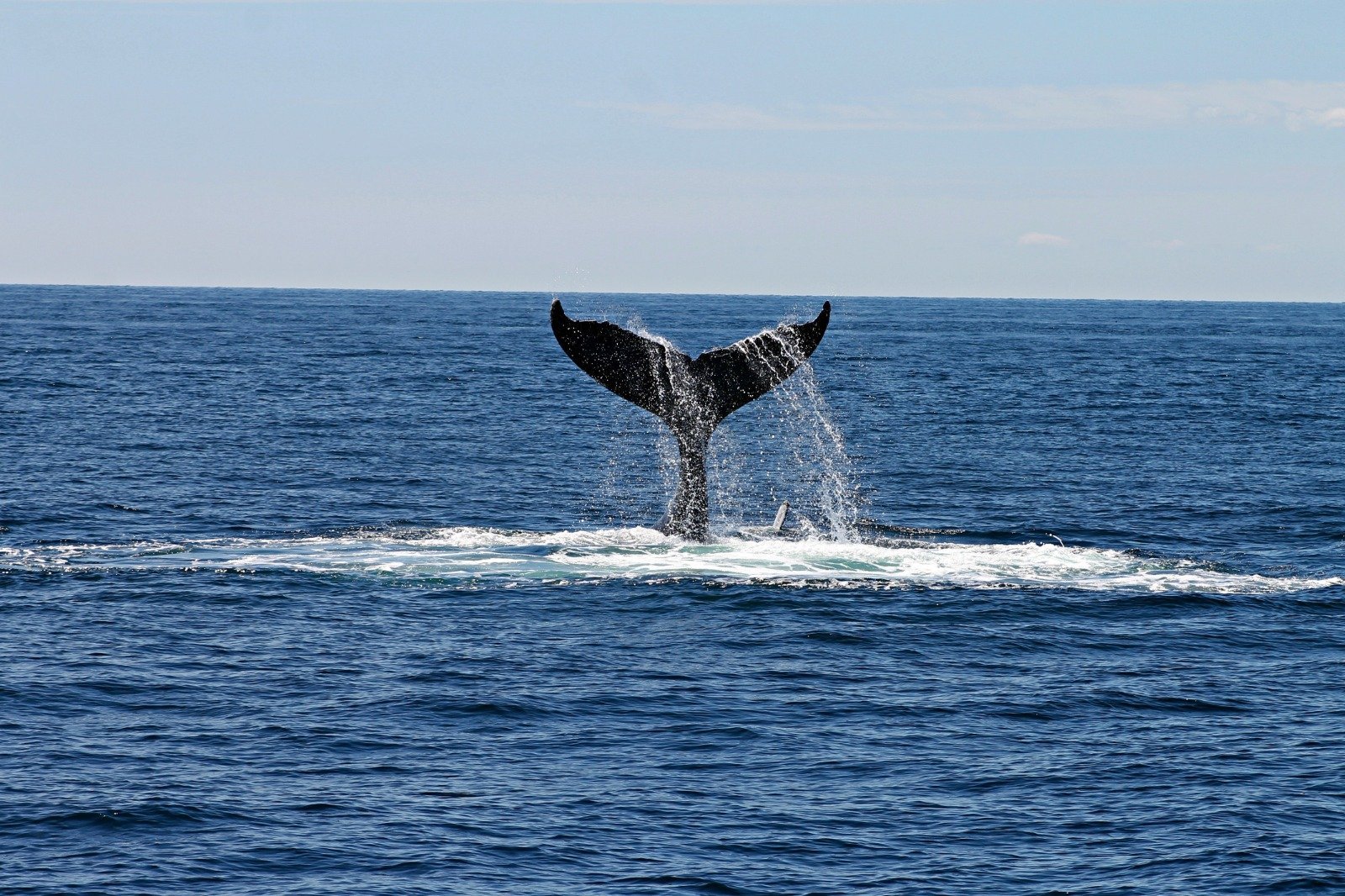
We inhabit a tiny part of what the universe has to offer.
Dolphins and whales have been passing down culture for 34 million years. Could learning to listen to animals help solve global challenges? Aza Raskin, Co-Founder and President of Earth Species Project, spoke at AKQA to share their rapid technological advances that could benefit people and the planet.
The Californian-based research nonprofit led by Aza and co-founders Katie Zacarian and Britt Selvitelle, together with a twelve-person team of artificial intelligence engineers, ecologists and science collaborators, is dedicated to harnessing the power of artificial intelligence to decipher the language of animals – from crows to humpback whales – as a fulcrum to transform our relationship with the rest of nature.
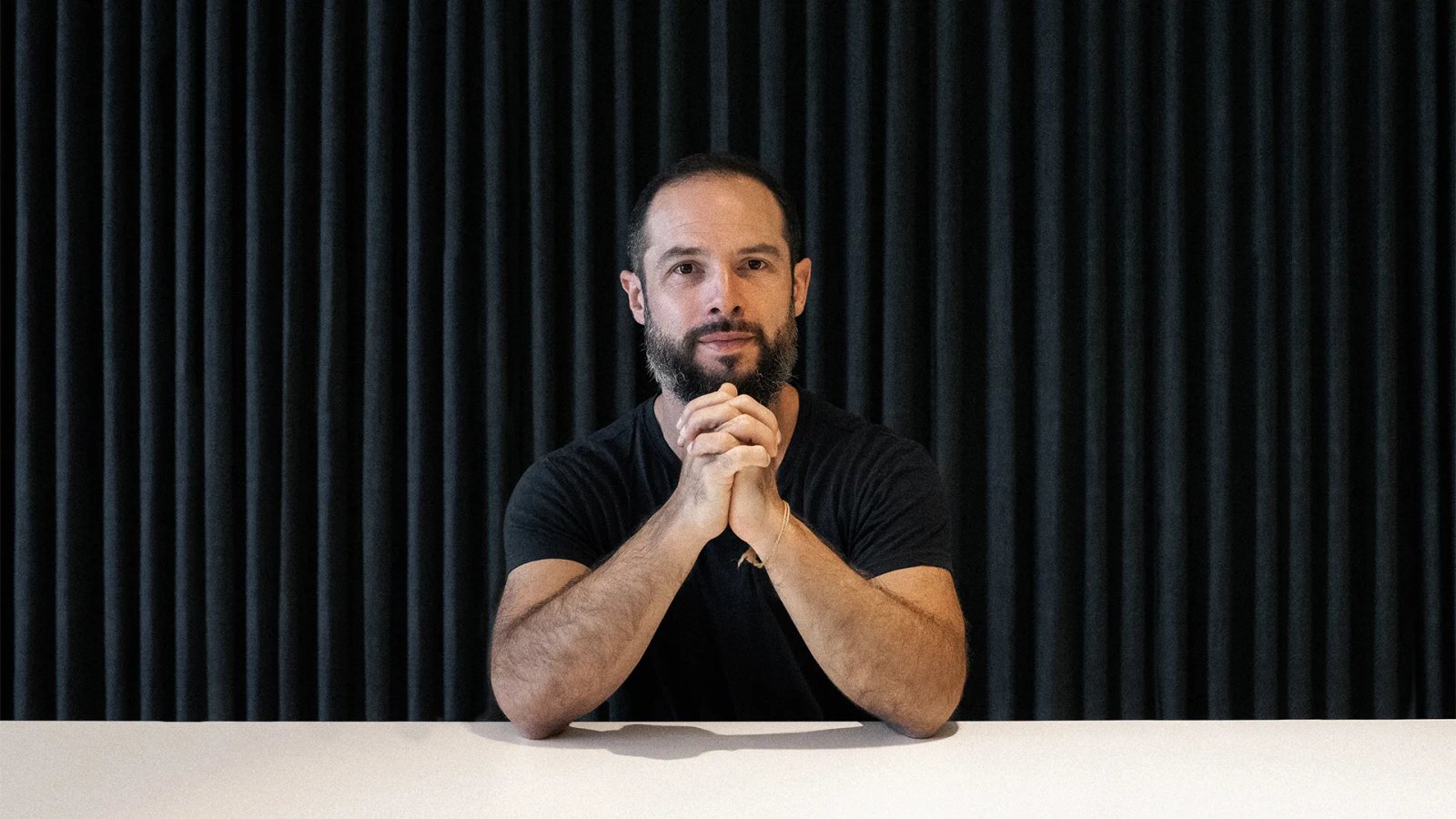
The genesis of Earth Species Project in 2013: a curiosity and respect for how technology changes the way we relate to ourselves, each other and the natural world.
The discussion, hosted by CEO and Founder of AKQA Ajaz Ahmed, offered insight into how sophisticated the communication systems of other species are while exposing how little human beings are currently cognizant of. Our ability to understand is limited by our ability to perceive and AI can open an aperture for the human mind.
While using machine learning – beyond traditional methods of observation – to analyse non-human communication is not new, nor is the fascination with understanding animal sounds, what is changing is the ability to gather complex bioacoustic data from recording the sounds of a wide variety of species and interpret it in new ways.
AI turns semantic relationships into geometric relationships. All sorts of internal relationships are represented and out pops a rigid structure that represents a language. The computer has no idea what anything in it means; it just knows they relate.

Reflecting on the mechanisms of translating human languages with AI, Aza shared: “It appears that every human language seems to fit in a universal shape, and this lets you translate. This is so beautifully profound”, adding that “in a time of such deep division, there is actually a hidden underlying structure that unites us all.” In 2017, the Earth Species Project questioned if this universal shape model could apply to non-human languages.
Inspired by the exponential advances in natural language machine processing, Aza, Katie and the team are focused on developing foundational tools using deep learning to analyse data quickly and map patterns, not just for one species, but all biology, simultaneously and in our lifetime. This comes with the awareness that the tools need to translate across different modalities too, including motion, and, further, the generation of associated sounds with such motion.
AI is learning how to decode, translate and synthesise the languages of reality.
This is underscored by an attempt to understand the other minds of Earth and find meaning in animal societies being worthwhile in protecting the planet and broad-scale accelerate the fields of ethology and conservation science: “Whatever it is that is the solution to humanity’s problems, it’s not currently in our imagination. This gives us a blurry polaroid picture into what is beyond human imagination.”
Likening the work of the project to the Hubble Space Telescope’s deepest view into the universe in 1995, Aza said: “We’re pointing our new telescope, AI, at spots that humans – or at least Western science – thinks are empty. And what we’re going to discover is everything.”
AI is the invention of modern optics. Modern optics gave us the telescope to look at the universe and discover that Earth is not at the centre. This time we’re going to look at the patterns of the universe and discover that humanity is not at the centre.
Taken from: https://www.akqa.com/insight/unlocking-the-mysteries-of-nature-with-ai/