




Close Menu
    Facebook Instagram LinkedIn
    Instagram LinkedIn Facebook TikTok
    TomilliTomilli
    Newsletter
    • Home
    • Marketing trends
    • Advertising trends
    • Trend setters
    • Better World ideas
    • Fashion trends
    • Design trends
    • Business ideas
    TomilliTomilli
    Newsletter
    Inicio » How 4 brands consolidated their media buys to increase ad effectiveness and boost reach
    Marketing trends

    How 4 brands consolidated their media buys to increase ad effectiveness and boost reach

    12 mayo, 20233 Mins Read
    LinkedIn WhatsApp Copy Link Facebook
    Share
    Facebook WhatsApp Copy Link LinkedIn

    Advertisers have ever more options for how and where to buy media. As a result, they often use multiple platforms to deliver a single campaign that may include display ads, video ads, audio ads, connected TV ads, digital out-of-home ads, and more.

    There are a few reasons marketers may choose to work with several partners, instead of just one, including access to exclusive inventory or a desire to preserve long-standing vendor relationships. Unfortunately, this splintered marketing approach has created recurring problems, such as overtargeting individual consumers with the same message and losing a unified view of campaign effectiveness. The result is wasted media dollars and a poor user experience.

    The good news is that media consolidation is feasible.

    How can marketers mitigate these challenges? It’s an urgent question, since the number of channels they use to reach audiences will only grow as users hopscotch from app to app, website to website, and device to device.

    The good news is that media consolidation is feasible. These case studies include some specific examples of advertisers who have successfully unified their media-buying approach in ways that have helped them properly cap frequency, preserve a positive user experience, and maintain a single source of campaign data.

    Danone increases ad effectiveness by consolidating video ad buys

    Global food producer Danone focused on improving its campaign effectiveness and efficiency by eliminating excessive media impressions. It embraced this new strategy after observing a major consumer shift to streaming along with growing concerns in linear TV, including ratings declines and cost increases.

    To identify and remove wasted spend, Danone worked with agency Wavemaker to consolidate all video ad buying in Google Display & Video 360 with the goal of increasing campaign effectiveness by reducing frequency.

    “Rather than overexposing users across campaigns, we’re able to [identify repeat] impressions and push those impressions out to other users who haven’t seen the ad, ultimately increasing our audience reach,” Kevin Manke, Danone’s senior manager of media and data strategy, told AdExchanger.
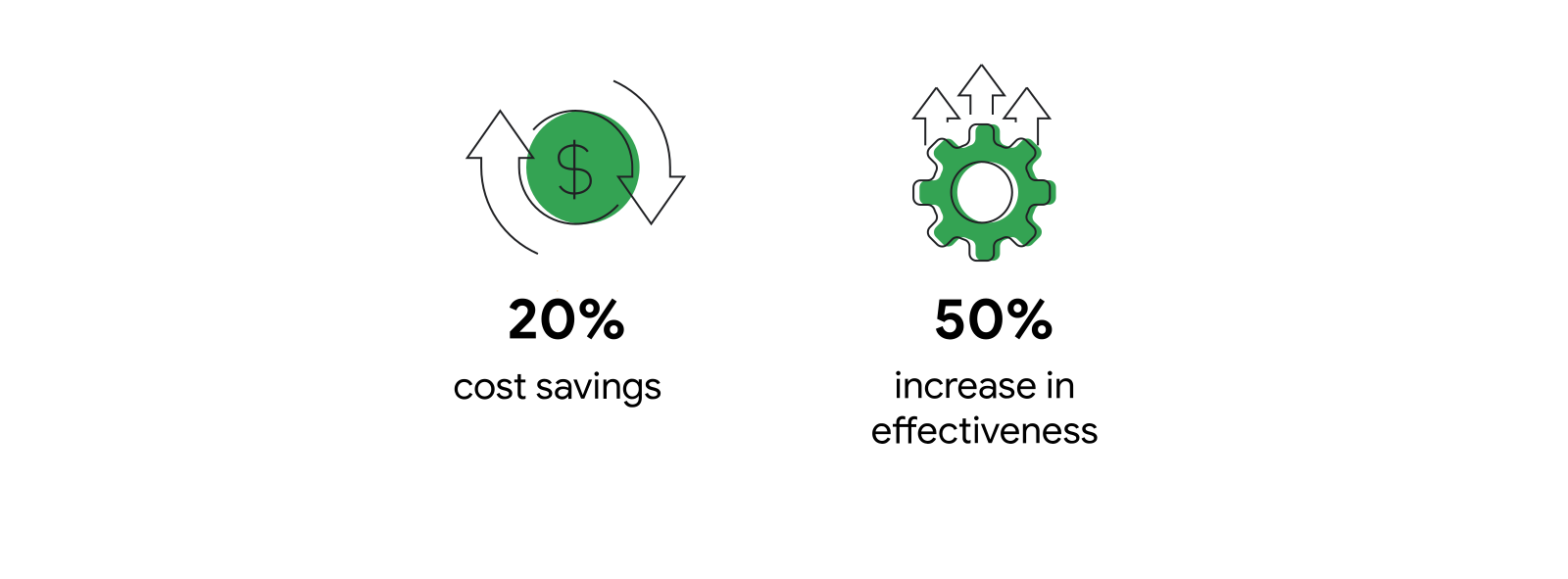
    Danone estimates that consolidating its video buying activities helped it achieve 20% cost savings while increasing overall ad effectiveness up to 50% for some brands.

    Danone estimates that consolidating its video buying activities helped it achieve 20% cost savings while increasing overall ad effectiveness up to 50% for some brands.

    Unilever Argentina increases reach by unifying media buys

    In addition to increasing efficiency, brands that consolidate their media investments can connect with new audiences in target markets. That’s because improving frequency management offers incremental reach to new consumers by reducing overlaps in ad exposure.
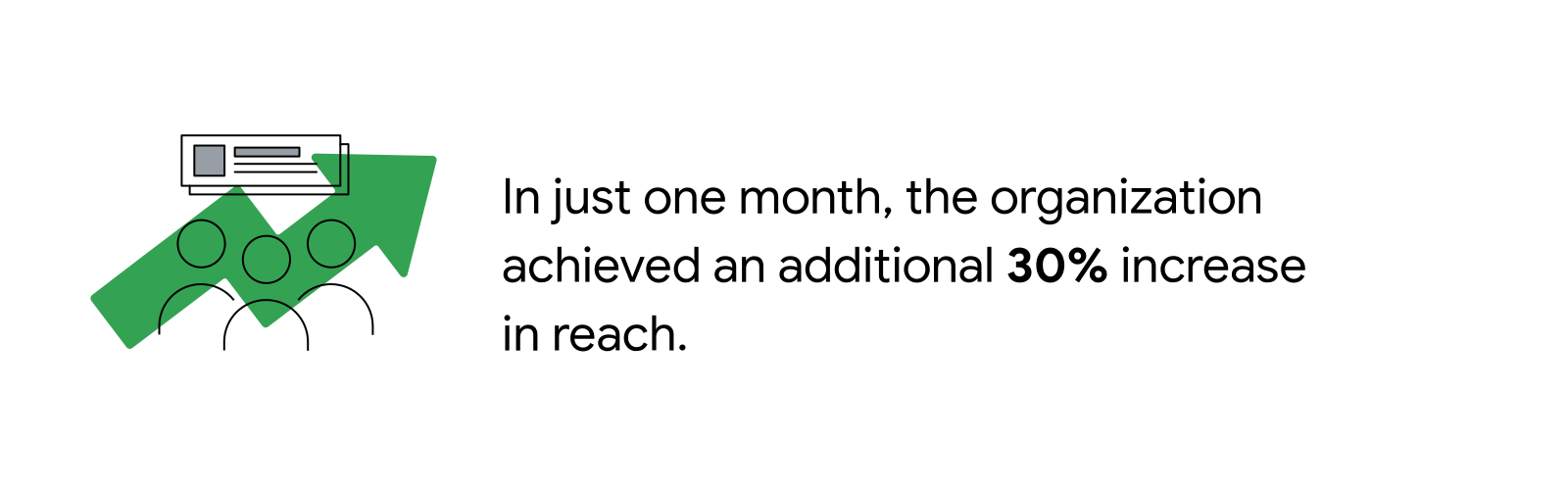
    In just one month, Unilever Argentina achieved an additional 30% increase in reach.
    In Argentina, Unilever turned to campaign-level frequency management when looking to promote its brands to new potential customers. It partnered with Matterkind to analyze how efficient it would be to unify its frequency controls across multiple campaigns, media types, and environments. With the goal of prioritizing reach and minimizing overexposure, it then consolidated all display and video strategies in a single buying platform. This single point of entry to media inventory gave it control over frequency caps for all insertion orders under one weekly campaign frequency. In just one month, the organization achieved an additional 30% increase in reach.

    Full note: https://www.thinkwithgoogle.com/marketing-strategies/data-and-measurement/media-consolidation/

    Share. LinkedIn WhatsApp Copy Link Facebook

    Artículos relacionados

    BBDO Bangkok Turns a 20-Year-Old Film Story Into a Viral Comeback for Music Duo BOYdPOD

    16 diciembre, 2025

    A Winning Formula

    21 noviembre, 2025

    Inside Edelman: Meet our U.S. Culture Champions – Blair Colson

    10 noviembre, 2025
    Trending

    Between Science and Emotion: How BrandCare handles the delicate balance for health advertising

    17 diciembre, 2025

    BBDO Bangkok Turns a 20-Year-Old Film Story Into a Viral Comeback for Music Duo BOYdPOD

    16 diciembre, 2025
    Más vistos

    POV: Snapchat and Cameo Ad Partnership

    Selecting the “110 Independent Creative Agencies to Watch”

    WINA opens registration and confirms Miami as academic venue for 2026

    Tomilli
    LinkedIn Instagram Facebook
    • About us
    press@tomilli.com
    © 2026 Tomilli. All rights reserved

    Type above and press Enter to search. Press Esc to cancel.

      NEWSLETTER

      Recibe nuestro newsletter sin ningún costo y entérate de las últimas tendencias.