



From reintroducing rhinos in India to supporting community energy needs in Madagascar – there’s lots of good news to share about WWF’s efforts, alongside partners and supporters, to tackle the climate and nature loss crises.
Crucial global breakthrough for ocean conservation
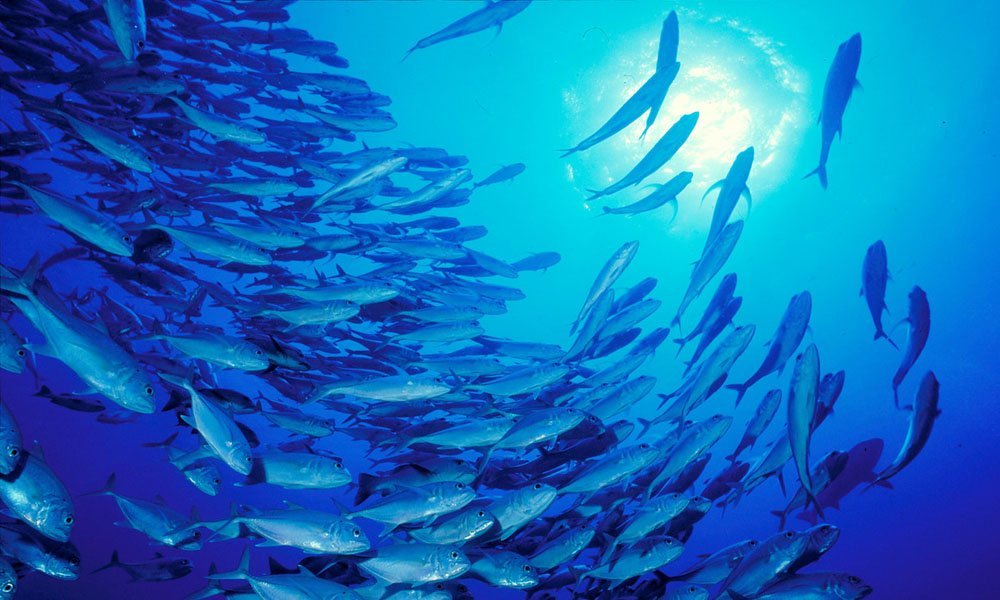
After nearly two decades of urging by WWF and others, a groundbreaking UN treaty was agreed back in 2023 to conserve marine life and create a framework for enhanced cooperation on the high seas – the vast areas of ocean, 99% of which are unprotected, that lie outside the control of any country and are being hit hard by unsustainable industrial fishing, shipping and more.
At least 60 countries had to ratify the treaty for it come into force and, after further persistent calls from WWF and other advocates, that threshold has now been reached – meaning that from 17 January 2026 there will finally be a legally binding mechanism for creating protected areas and regulating harmful activities in areas beyond national jurisdiction.
WWF will continue to urge all countries to ratify the treaty and support its effective implementation, as well as support the designation of marine protected areas in the high seas – essential to achieving the globally agreed target to protect 30 per cent of the oceans, supporting crucial fisheries, safeguarding the habitats of hundreds of thousands of species and helping to mitigate climate change impacts.
Landmark agreement on harmful fisheries subsidies
In yet more good news for marine life and coastal communities, a global agreement to end some financial support for harmful fishing practices – in part the outcome of two decades of dedicated advocacy by WWF and partners – has come into force.
The agreement by member countries of the World Trade Organization (WTO) takes direct aim at the estimated US$22 billion per year in harmful subsidies that drive illegal, unreported and unregulated fishing. These practices can have devastating impacts, damaging marine resources and ecosystems, undermining legitimate fishing practices and impacting the livelihoods of millions.
This is a landmark achievement – only the second agreement ever reached by WTO members and the first to have the environment at its heart. It will enable countries to reform and redirect harmful subsidies toward sustainable fisheries, helping rebuild fish stocks and supporting coastal communities.
WWF now calls on governments to move quickly on implementing this agreement, as well as ratifying the agreement if they have not already done so. We also urge action to close gaps related to additional rules on subsidies that drive overcapacity and overfishing.
Government climate obligations affirmed
In a landmark advisory opinion, the International Court of Justice has recognized that states have clear obligations to avoid harmful impacts from greenhouse gas emissions to the climate system and to nature.
This affirms the essential connection between climate change and nature loss – a key consideration that WWF highlighted in its submission to the court.
The court agreed that both communities and ecosystems should be protected from climate impacts, and harm to them triggers obligations of restoration or compensation – a major signal of hope for the world’s most vulnerable populations and for all ecosystems and species.
While non-binding, this advisory opinion carries considerable legal and moral authority – and will help to guide decision making on legal responsibilities for climate impacts.
WWF Global Climate and Energy Lead Manuel Pulgar-Vidal said: “The Court rightly acknowledged that climate change is a common concern of humanity, and that a healthy environment is the foundation for the health and well-being of people.”
New forest finance fund gets US$1 billion boost
The world is dangerously off track to meet the global goal set by over 140 world leaders to halt and reverse forest loss by 2030. So we warmly welcome the Brazilian government’s US$1 billion investment in the Tropical Forest Forever Facility (TFFF) – and urge other governments to follow suit.
Due for launch next month, TFFF is designed to incentivize countries with tropical and sub-tropical forests to keep their forests standing – using profits from its investments to provide payments to countries that are safeguarding their forests.
Crucially, it includes pathways for Indigenous Peoples and local communities to access and direct, at a minimum, 20 per cent of payments to countries.
This anchor investment from Brazil, which also originally proposed the TFFF, represents a critical step toward mobilizing large-scale finance for forest conservation.
It also signals a fundamental shift for nature and climate finance – widening the investor base to include governments that historically have been aid recipients alongside investors from traditional donor countries and private investors.
New ways for communities to raise concerns
WWF’s commitment to accountability has been boosted by news that its Office of the Ombudsperson is now fully operational.
The Office is a dedicated, independent mechanism through which individuals and communities can raise concerns about social or environmental impacts related to WWF’s work.
It offers neutral and independent spaces to resolve complaints, identify improvements in how WWF works and build stronger relationships with our stakeholders. Through its participative approach, the Office enables communities to have a voice on the issues that affect them and shape WWF’s conservation efforts.
This crucial step forward is part of the Environmental and Social Safeguards Framework, WWF’s overall approach to managing the environmental and social risks of our work – aiming to deliver better conservation outcomes and enhance the well-being of communities in the areas where we operate.
The Ombudsperson is Susana Rodriguez, who brings a wealth of experience in mediation, stakeholder engagement and operationalizing grievance mechanisms in complex contexts.
Taken from: https://wwf.panda.org/?14905966/From-India-to-Madagascar–stories-of-success