



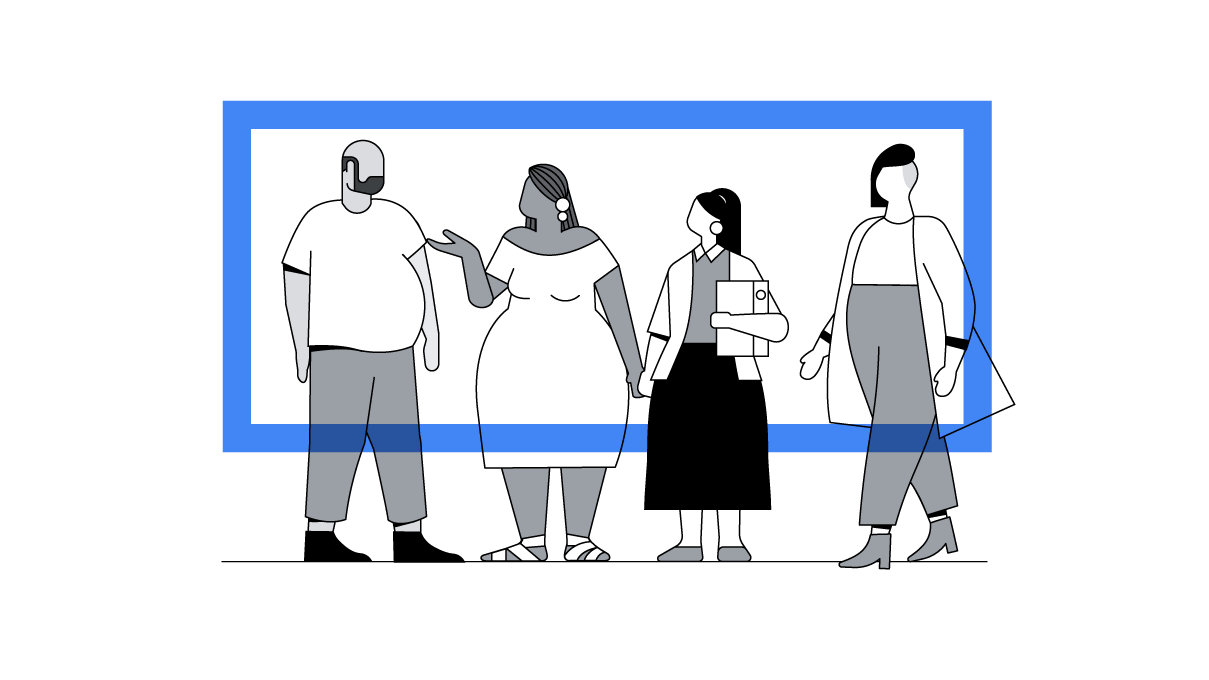
Tigress Osborn is chair of the U.S.-based National Association to Advance Fat Acceptance (NAAFA), which works to create a better world for fat people through education, advocacy, and support. Here, she discusses how it helped Google’s marketing become more plus-size inclusive, why fat-positive representation is critical, and five basic tips that marketers can put into action. A version of this piece also appears in Ad Age.
I’ve been fat since I was a teenager. I’ve known since then that I would only see other fat people in magazines, movies, and on TV as a “before picture,” “fat best friend,” or “fat punchline.” Certainly no one on a red carpet anywhere would look like me, my aunts, or my neighbors.
As companies have begun to see the social and economic benefits of reaching consumers with messages that reflect diverse demographics, fat representation continues to lag behind. Even in today’s media landscape — where body positivity is a buzz phrase and we occasionally see big bodies on billboards — most advertisers act like fat people don’t exist unless we’re being sold diets.
In January 2021, I became the chair of NAAFA, an advocacy organization for fat people. A few months later, Google requested our input on marketing guidelines they were developing around body inclusivity. We were intrigued but reserved. Were they willing to actually learn about anti-fatness and fat justice issues, or simply looking for shortcuts to show off a few barely plus-size people, then pat themselves on the back for being inclusive?
Fat-positive representation in marketing requires an understanding that anti-fatness is a serious social justice issue.
We quickly discovered Google’s plans to make its internal marketing toolkit, All In, available to everyone. The toolkit, first born in 2017, was a resource for Google’s own teams to understand the do’s and don’ts of authentically representing people in marketing who were historically excluded. By expanding these resources and offering them to everyone, the ambition was to help make change a collective reality.
Beyond NAAFA, Google collaborated with several other organizations serving underrepresented communities to develop insights and best practices to be shared across the advertising industry. We trusted that the Google team would treat the fat community with the same care in creating these resources as they did when creating for their own employees.
Here’s what we told Google: Fat-positive representation in marketing requires an understanding that anti-fatness is a serious social justice issue, one that intersects with many other issues of equity that socially responsible companies aspire to tackle. And there are five basics for plus-size inclusion that marketers can start tackling today.
1. Examine your language
NAAFA has been advocating for fat rights since 1969, and we’re one of many fat rights groups who insist on using the word “fat” rather than other terms and euphemisms. We know there can be mixed reactions to the f-word, and that may be especially true when it comes from businesses. Most companies use terms like “plus-size,” “larger,” or “higher weight.” Google opted to use plus-size based on feedback from their users. What’s best for your business will likely depend on what your audience wants. How can you look to fat people for guidance? Consider this, and then get a plan in place.
2. Start behind the camera
If you’re not inclusive off screen, you won’t be inclusive on screen. Hire plus-size staff. Work with fat creatives and influencers. Ensure your workspaces are accessible to bodies of all sizes and abilities. One pro tip: If your spaces don’t offer a variety of seating, you’re not there yet. And spend some time checking your workplace culture too. Diet jokes are not icebreakers, and weight-loss challenges “for health” actually create a toxic environment for many people, regardless of size.
3. Show fat people of all shapes and sizes
When you cover up plus-size bodies in ways that other bodies are not, that’s othering, not inclusion.
Inclusive representation means capturing the full range of fat bodies, including larger fat people, who are sometimes called “supersize” or “superfat.” It means not limiting representation to certain body types, such as hourglass figures for women and femmes. It also means actually showing fat people. When you cover up plus-size bodies in ways that other bodies are not, that’s othering, not inclusion.
4. Include all kinds of big people
Beyond capturing fat people of all shapes and sizes, inclusivity also requires accounting for all aspects of people’s identities. Current “progress” too often looks like able-bodied, young, cisgender white women who are only slightly larger than the marketing norm. But in the U.S., this is not an accurate reflection of the majority of people who are fat. Every other facet of identity you can think of — race, ethnicity, gender, age, ability, and so on — includes fat people. All fat people need representation.
5. Throw out the stereotypes
Finally, fat people are more than sidekicks, buffoons, and caregivers. There’s room for more roles. Show plus-size people in professional and leadership positions. Show us with agency, autonomy, and confidence. Include varied relationship statuses, social groupings, and family structures.
Visibility in marketing allows us — and the world — to see the full range of our humanity.
Representation in marketing is only a small slice of what businesses can be doing to make the world more inclusive, but it’s an important slice. Fat people’s erasure from media is dehumanizing. Visibility in marketing allows us — and the world — to see the full range of our humanity. The bottom line? We want to see ourselves represented just like everyone else does. Start with these tips. Then check out All In for more detailed insights.
Visit NAAFA to find out more about the organization and their activism efforts.