



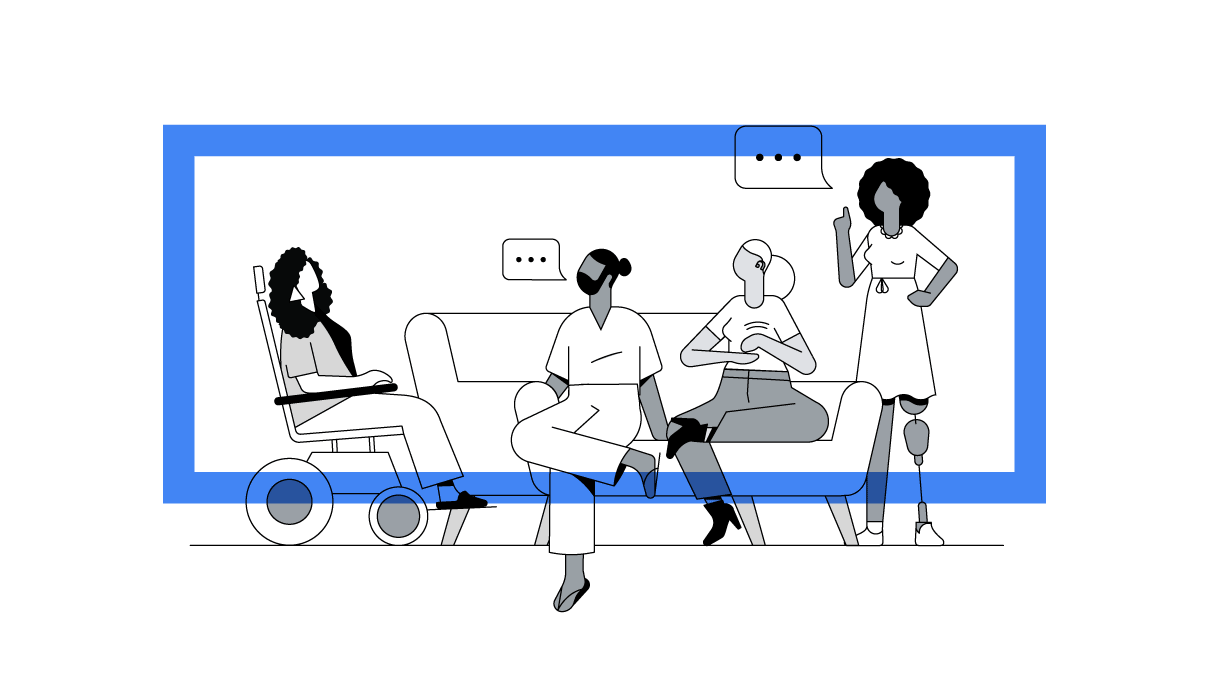
The disability community continues to be underrepresented and undervalued in advertising. Here, KR Liu, Google’s head of brand accessibility, shares her personal story and why accessible marketing is critical for every brand.
I am female, queer, and disabled. For much of my life, these parts of my identity were rarely, if ever, authentically represented in media and advertising. This made me feel different, unvalued, and alone. As a result, I spent more than a decade hiding who I was in my personal life and at work.
Then, a few years ago, I began to recognize that each part of my identity was essential and that no one part could exist without the other. It was the first time I felt as though people cared about all of me, rather than only my disability. That feeling was transformative.
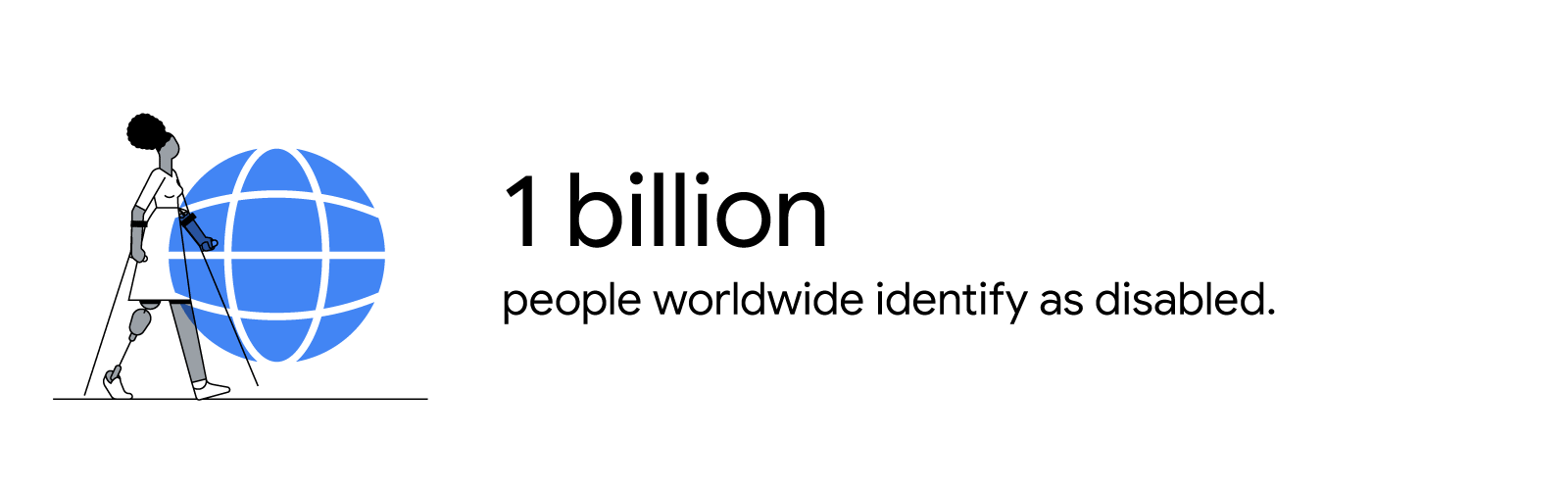
Sadly, many others can relate to my experience of not feeling fully seen and represented in society, or in brand advertising. Great ads should reflect everyone, including the 1 billion people worldwide who identify as disabled and control 8 trillion dollars in spending. They should also acknowledge intersectionality, because like me, every disabled person has many dimensions to their identity that make them, them.
I’m fortunate to have a day job that focuses on improving the accessibility of Google’s marketing for our billions of users. While accessibility has always been core to our company’s mission — to organize the world’s information and make it universally accessible and useful — being truly accessible is a journey, and we haven’t always gotten it right. We’re constantly finding ways to improve, and we are hoping to help other brands improve too.
A year ago, we shared Google.com/All-In, an inclusive marketing toolkit for brands and agencies. Today, I’m excited to share that All In now includes an all-new playbook on accessible marketing, which we developed in partnership with LaVant Consulting and Disability:IN, and has been endorsed by the American Association of Ad Agencies, Ad Council, Cannes Lions, and many other leading organizations.
The playbook has meaningfully guided our marketing this past year, and is the result of yearslong research and collaboration across many accessibility topics — from web experience to authentic depictions of people with disabilities. We’re sharing it publicly with the hope it will improve the representation of disabled people in the media and help create work that is fully accessible. And, here, I’m sharing three core principles from the playbook, with hope that it will inspire you to visit All In to learn more.
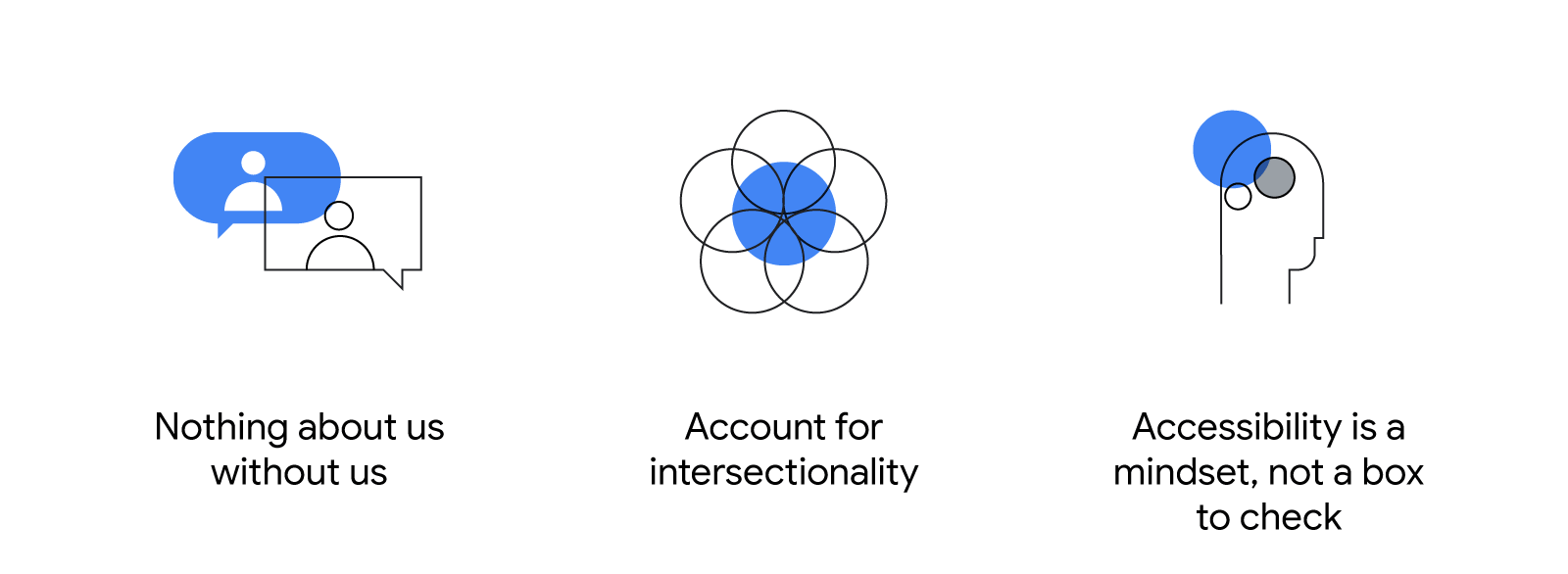
Nothing about us without us
Disabled people are their own experts, which is why it’s so important to bring in their voices from the start. Often this involves dedicating the resources required to do accessible marketing right, such as training and support for internal teams.
For many companies, this may also involve leaning on a specialized third party for guidance. At Google, we sought out partnerships with several experts in disability inclusion, including LaVant Consulting and Disability:IN. Partnerships like these allow you show allyship and engage directly with the disabled community, which helps to expand the ideas that fuel your work.
Account for intersectionality
For marketing to feel truly inclusive and accessible, brands must think about people with disabilities holistically, and consider the full spectrum of markers that comprise identity. Beyond disability, gender, race, ethnicity, sexual orientation, age, and education level are just a few of the additional ways that people may identify themselves.
Failing to recognize and reflect intersectionality in your messages runs the risk of reducing disabled people’s multidimensional identities into oversimplified stories that can perpetuate stereotypes, rather than uplifting them. An excellent rule of thumb is to always opt for nuanced narratives, preferably ones that come directly from the people who are part of the narrative.
One example of this is our campaign, “A CODA Story,” which shares the multigenerational personal experience of Tony Lee, an Asian American Googler and a child of deaf adults (CODA). The film portrays Lee and his family as they bridge gaps in distance and communication during the pandemic by using Google’s assistive technologies.
Accessibility is a mindset, not a box to check
Best practices for disability inclusion and accessibility marketing change over time as technology evolves and culture shifts. It’s an ever-evolving journey that depends heavily on the needs of people with disabilities. Like other forms of inclusion, accessibility should be a constant commitment that’s embedded into every aspect of your brand campaigns — from conception to execution, and beyond.
At Google, we’ve made a lot of progress on accessible marketing, but we recognize that there’s plenty of work ahead. Achieving our accessibility goals is a continual process, and we are perpetually learning from it.
Committing to accessibility in marketing breaks down barriers, which is better for all users.
Together, we can drive a cultural shift that represents and celebrates people with disabilities as their whole selves. A world where everyone can see themselves is one where everyone has what they need to thrive.