



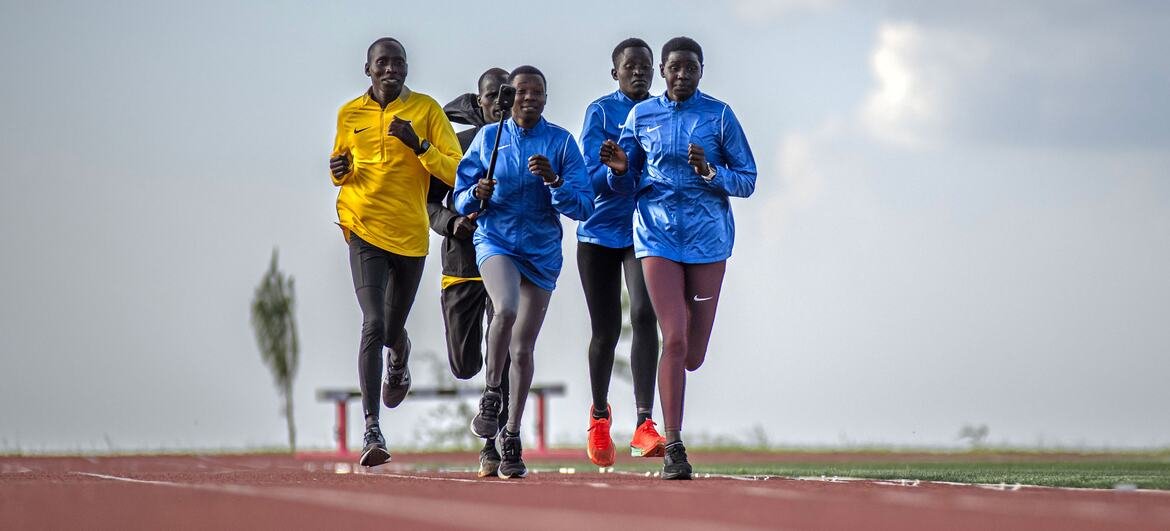
Running is popular right now. But for many women in Uganda, it’s not a health trend: it’s a way to regain autonomy.
For girls and young women in the Sebei region, running has become a safe space. There, the women are accompanied by Zuena Cheptoek, a running coach who not only trains athletes, but also acts as a mentor and first line of defense against abusive practices such as female genital mutilation and child marriage.
In an interview with the United Nations (UN), Zuena says that the girls trust her and are able to tell her things they would not say to anyone else, because of societal pressure and the violence they could face for resisting their culture. This initiative is also supported by the Joshua Cheptegei Development Foundation, in collaboration with UNFPA and UNICEF, which use sport as a tool to create safe spaces.
Here, sport is no longer just training. It’s a path to independence. Every year, the sport brings together children from the region, but its impact goes beyond a fitness competition: twelve girls are selected to receive educational sports scholarships.
The path, however, is not linear. As Cheptoek points out, “girls who become successful athletes are often told, ‘You should stop running and get married.’” Even so, education and economic independence open doors to new choices.
This conversation becomes even more important after the murder of Ugandan runner Rebecca Cheptegei in 2024, a case that highlights the violence still faced by many women seeking independence.
Things like running, studying, or personal life decisions are often taken for granted. But in some places, like Uganda, these are still rights women are fighting for every day. This story is not just about sports, it is about what it means to be able to choose. It is also a reminder that something we take for granted, may be a dream someone else is running for.
Source: United Nations
Tomilli reports on what really has an impact.