



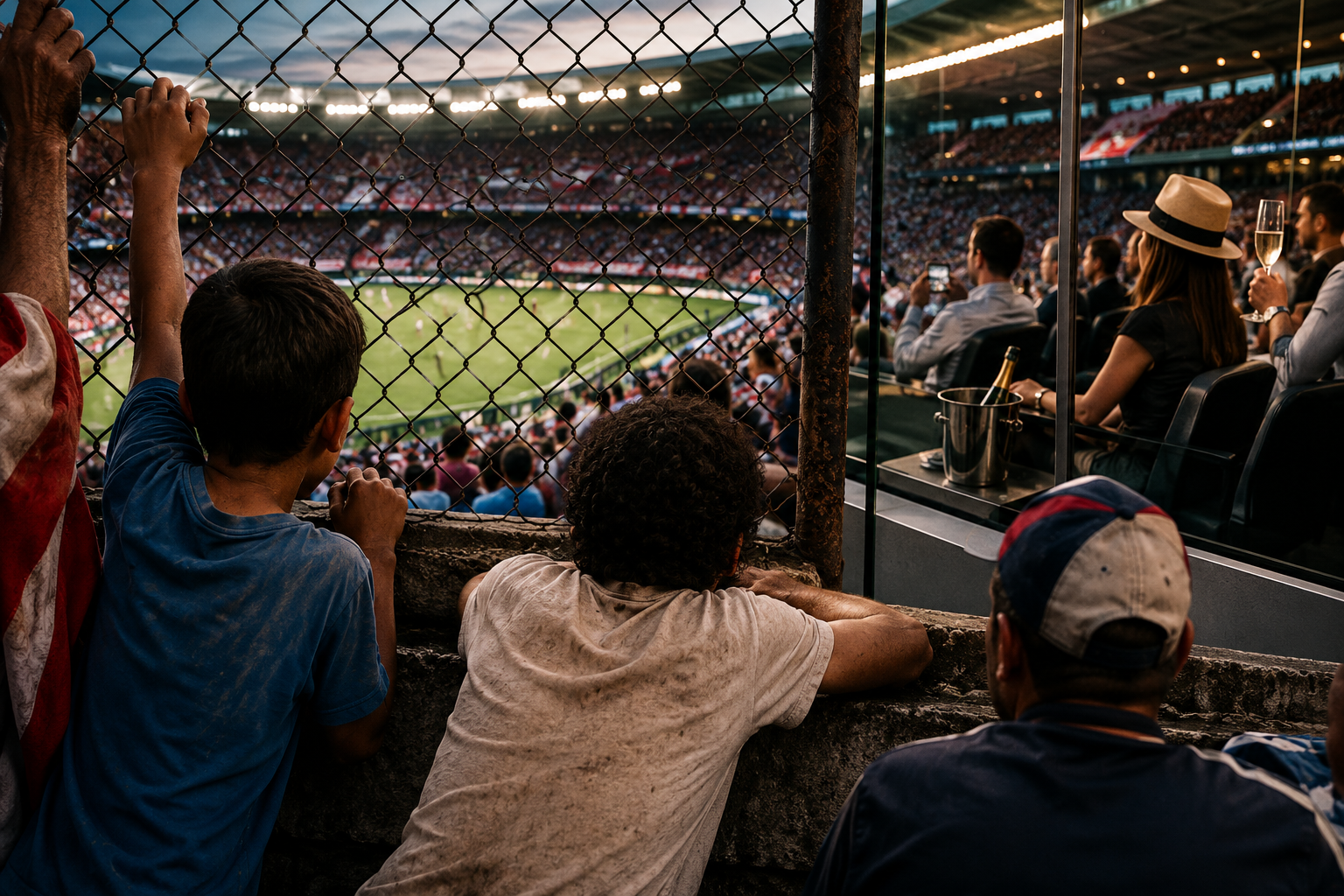
The FIFA World Cup has progressively transformed from a popular celebration into an exclusive and elite event, where high ticket costs price out the traditional soccer fan in favor of luxury tourists, corporations and VIP experiences.
Tickets for the World Cup range from USD $60 to figures exceeding USD $10,990 for the final. FIFA implemented a dynamic pricing model, so the cost varies significantly depending on demand and the tournament phase.
But, at what point did the “people’s sport” become entertainment for millionaires?
There was a time when football was a street game. It was the pass time of the working class. It was the “people’s sport”. Today, with tickets to the World Cup exceeding the minimum wage in most Latin American countries, soccer doesn’t seem to be “the people’s sport” anymore.
What has changed?
- The arrival of television and “pay-per-view”: Before the 90s, clubs depended almost 100% on the local box office (people who paid for a physical ticket). Satellite television and pay-per-view changed the model. A European team or FIFA itself found that a viewer in Tokyo, New York or Bogota generated more revenue in advertising and subscriptions than the traditional fan who went to the stadium every Sunday.
- The gentrification of stadiums: Old stadiums with standing area (cheap tickets for massive audiences) were demolished or remodeled for safety and comfort. They were replaced by numbered seating, VIP boxes and high-cost corporate zones.
- The “Superbowlization” of tournaments: Events such as the World Cup or the Champions League are no longer organized only as sports tournaments. Today, they are designed as festivals for mass entertainment, attracting corporations and tourists with high purchasing power, displacing the traditional fan.
- Algorithms and dynamic pricing: FIFA and the major leagues adopted the model of airlines and pop concerts (such as Taylor Swift). The price is no longer fixed; it rises based on algorithms that respond to supply, demand and legalized speculation.
The problem is not that football has grown as an industry, but that its growth seems to have excluded those who made it the global phenomenon that it is today. Today, the possibility of enjoying a match live belongs to the highest bidder. Because, when price becomes the main filter, an inevitable question arises: are big sporting events becoming experiences reserved for the elite?