

Cat House, by Royal Canin and INDIE, invites you to see the world from a cat’s perspective
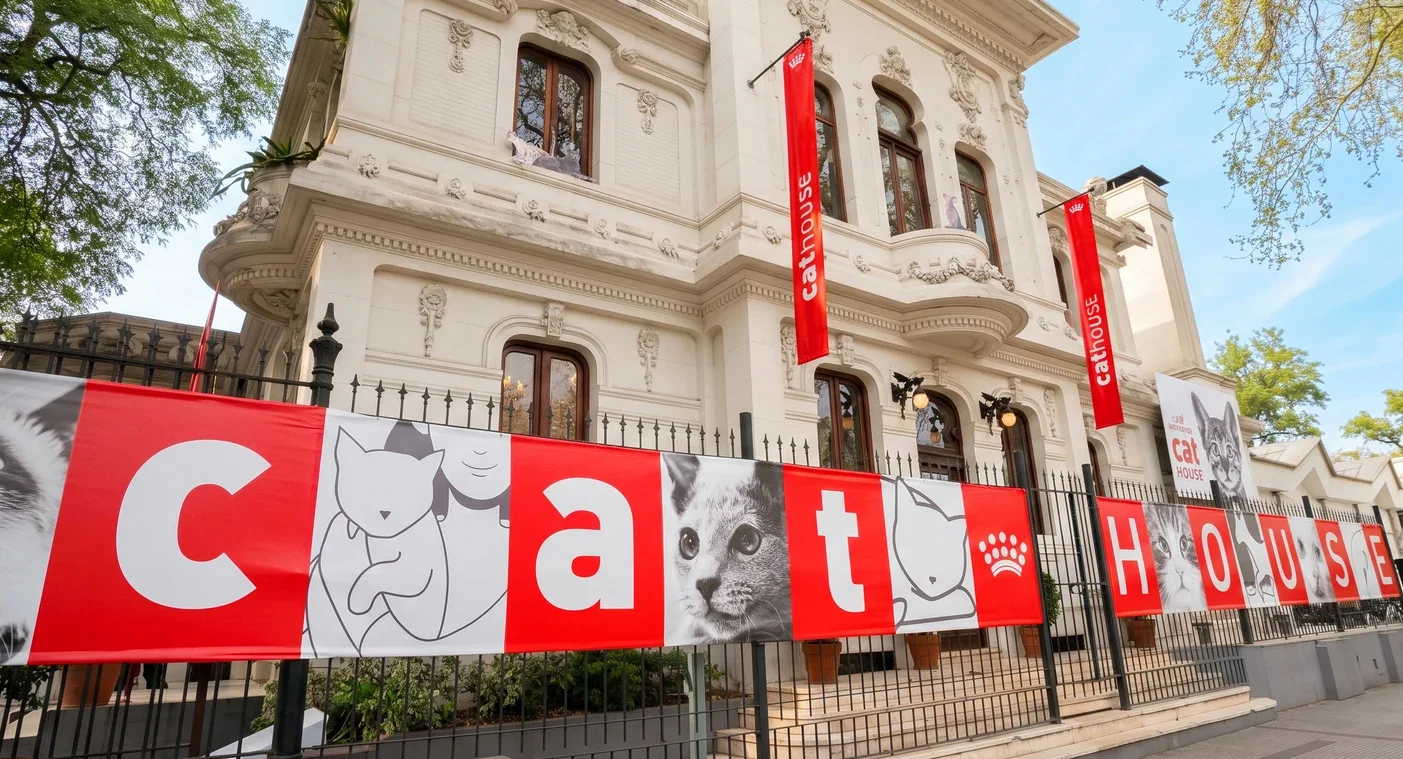
The creative communications agency INDIE and the pet food company Royal Canin were recognized by the 2026 Tomilli Summit for their campaign Cat House, an immersive experience intended to bring the public closer to their feline companions via scaled-up spaces, virtual reality, and veterinary guidance.
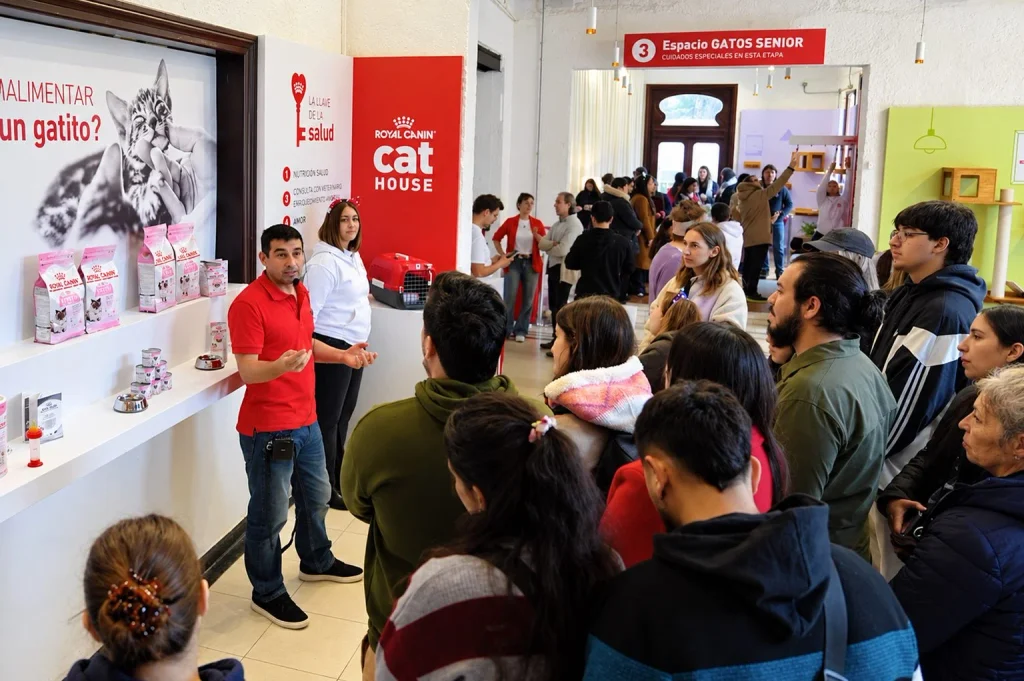
According to INDIE, the project received 1,015 visitors over the course of three days. The tour proposed understanding how cats’ needs change throughout their lives and ideas for adapting one’s home in favor of the welfare of furry family members.
The idea arose from an observation INDIE made while working with Royal Canin over the past decade. More families have cats, but many doubts remain regarding how to care for them at every stage of their lives.
In an interview with Tomilli.com, the INDIE team explained how it turned Royal Canin’s veterinary knowledge into a brand experience and what the team observed based on the public’s response.
What need or insight gave rise to Cat House?
“At INDIE, we have been working alongside Royal Canin for more than ten years, which has allowed us to develop a deep knowledge of the pet market, especially the dog and cat food markets. During this time, we saw how the feline population grew year after year among households, as well as [cat] life expectancy. It is no coincidence that many consider cats to be the pet of the future.
However, there are still many myths [circulating] and a lack of knowledge about their specific needs, behavior, and the care they require at different stages of their lives.
That’s where we identified a very interesting opportunity: to bring people valuable information about cat welfare, but from a different, more approachable, and participatory experience.
Royal Canin has extensive scientific knowledge about nutrition and animal health. The challenge was to find a way to transform that knowledge into an experience capable of connecting with current and future pet owners, awakening their curiosity and helping them make better decisions for their cats.
This is how we created Cat House, a proposal that combines education, entertainment and immersive experiences to promote responsible tenure and contribute to Royal Canin’s purpose of making a better world for pets.”
How did you come up with the idea of inviting people to experience the world from a cat’s perspective?
“Our creative team started from a simple and fundamental premise, which we have shared with Royal Canin for many years: To take better care of our pets, we first have to understand them better.
And we thought there was no better way to do that than by inviting people to literally put themselves in their place. To discover how they perceive the environment, how their needs change throughout life and what we can do to accompany them at each stage.
The interesting thing was that we didn’t want to tell people what the world of cats is like. We wanted them to be able to experience it.
The biggest challenge was to turn scientific knowledge and concepts related to feline behavior and health into simple, entertaining and memorable experiences, without losing its educational rigor.
That led us to think of Cat House as a journey where each space had something to discover, experience, and learn.”
The tour combines scale installations, virtual reality, games, and veterinary guidance. How did you decide which resources to use at each stage to make the information understandable and memorable?
“From the beginning, it was clear that technology and creative resources should be at the service of experience, and not the other way around. Each resource had to help us explain something and, above all, to allow people to understand it from their own experience.
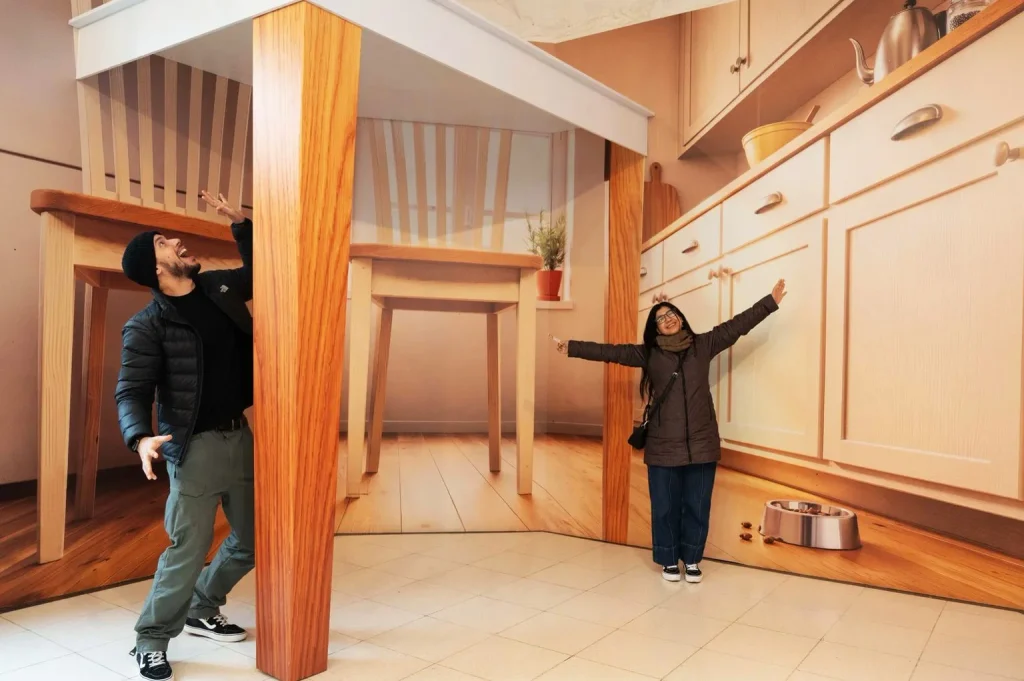
We work with the concept of gatifying, which consists of adapting the spaces of the home so that cats can explore, climb, play, rest and feel safe, respecting their natural needs.
From there, we design different experiences to cover the different stages of their lives.
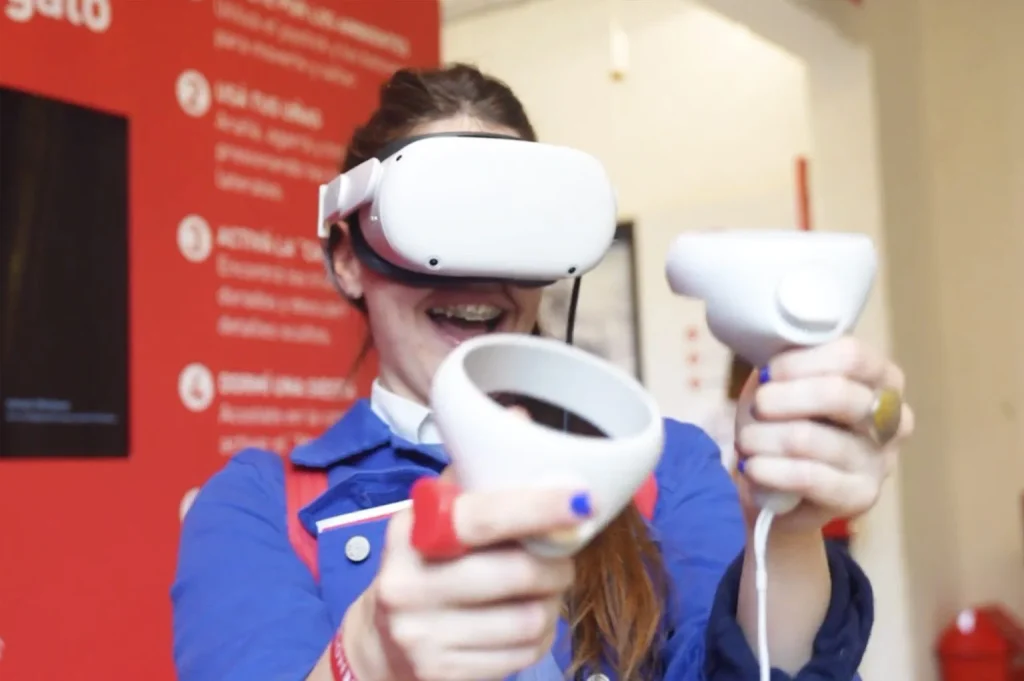
We created facilities at scale to experience how a newly arrived kitten perceives his environment; we used virtual reality to discover the world from the perspective of an adult cat; and we developed games and activities that allowed us to understand the physical and behavioral changes associated with aging.
We also include spaces dedicated to environmental enrichment, home adaptation, and identifying plants that may be toxic to cats. The entire tour was accompanied by veterinary professionals, who helped connect each experience with concrete recommendations for daily care.
The idea was for each visitor to take away more than just a good memory: a learning experience they could apply in their own home.”
Where do you think Cat House’s main innovation lies?
“I believe the main innovation lies in the way of approaching a topic that is usually communicated through information and transforming it into an experience lived firsthand.
It was not about incorporating technology simply to innovate, but about finding new ways to generate understanding, empathy, and learning.
Cat House managed to combine scientific knowledge, creativity, entertainment, and participation in a free experience, open to all kinds of audiences and with a very clear purpose.
For three days, people were able to approach topics related to cat care from a completely different perspective.
For me, that is the most interesting aspect of the proposal: demonstrating that a brand experience can go far beyond generating visibility or interaction. It can also bring knowledge, modify perceptions and generate a positive impact on the daily lives of people and their pets.”
How did you work with Royal Canin and veterinary professionals to translate specialized knowledge into a creative experience?
“It was a process [requiring] several months of joint work; enriching and very collaborative.
Royal Canin marketing teams and veterinary professionals participated, along with our strategy, creativity, accounts and production teams. We also add specialists in environmental enrichment, architecture and organizations related to animal welfare.
Each one brought a different perspective, and that was fundamental to building a solid experience, both conceptually and in its implementation.
There was a permanent work of exchange, learning and collective construction. Specialists helped us understand the content and we looked for the best ways to transform it into accessible, engaging and memorable experiences.
I think one of the keys was that we all work with the same goal and with a lot of openness to listen and build on the ideas of others.
The result was an experience that managed to maintain the scientific rigor of Royal Canin without losing the freshness and the ability to surprise that we sought from the creativity.”
What results or reactions did you observe from visitors? We would like to know figures, lessons-learned, or examples that allow us to understand the impact of the experience.
“Public response exceeded our expectations. Reservations for guided tours sold out in just 24 hours, and during the three days of Cat House, we welcomed 1,015 visitors.
But beyond the numbers, what surprised us the most was the enthusiasm and level of participation. There were visitors who discovered things they did not know about their cats, that asked the veterinarians questions and that left with new ideas to apply in their homes.
It was also very rewarding to see how the experience sparked interest in a future edition, something we are still asked about.
In terms of results, we conducted 70 guided tours and 9 specialized talks. Additionally, we donated 1,015 kilos of food and registered 25 requests for cat adoption.
The experience also had an important impact beyond Cat House, with more than 3 million views on social media, a reach of close to 2 million people, more than 115,000 interactions and 61 posts.
I believe the main result was having managing to generate a genuine conversation, interest, and participation around a topic as important as animal welfare.”
What does it mean for the team that Cat House is part of the Tomilli Summit’s 2026 Golden List? What value do you find in a meeting dedicated to innovation recognizing these types of initiatives?
“It is of great satisfaction for the entire INDIE and Royal Canin team, because it represents a recognition of a lot of work, creativity, and passion.
Moreover, the recognition has special significance because innovation was present from the origin of the idea to its implementation.
In addition, it has a special meaning because innovation was present from the origin of the idea to its implementation. In addition, it has a special meaning because innovation was present from the origin of the idea to its implementation.
I think innovation is often associated exclusively with technology, when in reality it is also about finding new ways to solve problems, connect with people and generate value.
That is why having Cat House recognized by an international festival dedicated to innovation is of enormous value to us.
It is also a source of motivation for us to continue exploring new forms of communication and demonstrating that from our region we can develop relevant ideas, capable of transcending borders and dialog with the best of international creativity.”
What Cat House lesson-learned would you like to share with other agencies and brands looking to innovate? Do you see possibilities to expand or replicate the experience?
“At INDIE we are always looking for new ways to do things and we believe in developing projects with our clients, and working as one team. Cat House was a clear example of that philosophy.
There are projects where you reach a good result after a complex and exhausting processes. In this case, the opposite happened: we really enjoyed every stage.
And I think that is one of the main lessons Cat House left us: the best ideas often appear when we are able to integrate different knowledge, experiences and looks.
Communication professionals, creatives, veterinarians, environmental enrichment specialists, architects, producers and organizations dedicated to animal welfare. That diversity was one of our greatest strengths.
We also reaffirm something we believe in INDIE very much: Innovating does not necessarily mean doing something more complex. Sometimes, real innovation is about finding a simpler, closer and more effective way to communicate something important.
Looking ahead, we believe Cat House has enormous potential to continue growing, evolving, and reaching new audiences and markets.
Because, ultimately, the idea stems from a universal need: the better we understand our cats, the better we can care for them.
Cat House, developed by, INDIE and Royal Canin, made the Tomilli Summit’s 2026 Golden List. The experience turned veterinary knowledge into practical ideas for visitors to better understand their cats and adapt their homes to their needs.
About Pablo Cubero

As Founder and Creative CEO of INDIE, an independent communication agency with a presence in Argentina, Chile, and the United States, Cubero provides consulting services to clients throughout the region.
With more than 25 years of experience in the advertising industry, he has worked for important national and international brands, participated as a judge in various festivals and received numerous awards for his creative work.
Cubero has led the evolution of INDIE for 13 years, promoting a vision of communication that integrates strategy, creativity, innovation and production to develop solutions that transcend traditional advertising formats.