



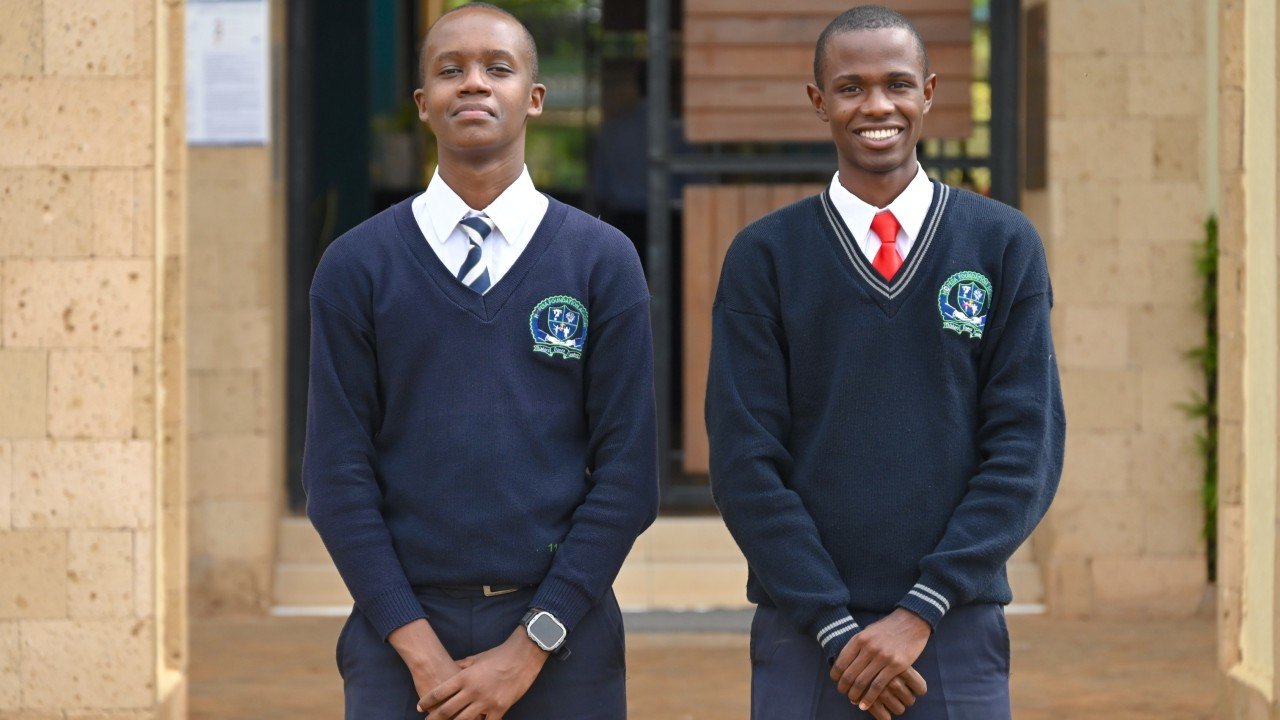
Most emission-reducing technologies are developed in large laboratories or research centers. However, one of the year’s most interesting environmental proposals was developed by two 17-year-old students in Kenya.
Fredrick Njoroge Kariuki and Miron Onsarigo developed HewaSafi, which means “clean air” in Swahili, an exhaust system for vehicles made from agricultural waste, coconut shells, discarded batteries and algae. According to its creators, the technology is capable of capturing more than 90% of the matter generated by engines.
The idea came from a personal experience. Fredrick suffered a lung condition aggravated by air pollution, a problem that, according to the World Health Organization, contributes to approximately 1.1 million deaths in Africa in 2019.
Considering this bleak scenario, the two youths designed a low-cost solution aimed especially at mass-use means of transport such as minibuses and motorcycles, responsible for a significant part of emissions in many African cities.
The interesting thing about HewaSafi is not just its ability to filter particles. It also demonstrates how innovation can arise from local contexts, leveraging materials available in each territory to solve global problems. Rather than relying on complex or expensive technologies, the project transforms everyday waste into a tool with the potential to improve air quality and the health of thousands of people.The initiative was recognized as the African winner of the 2026 edition of The Earth Prize, an international program that encourages students to develop environmental solutions with real impact.
Source: The Earth Foundation


