



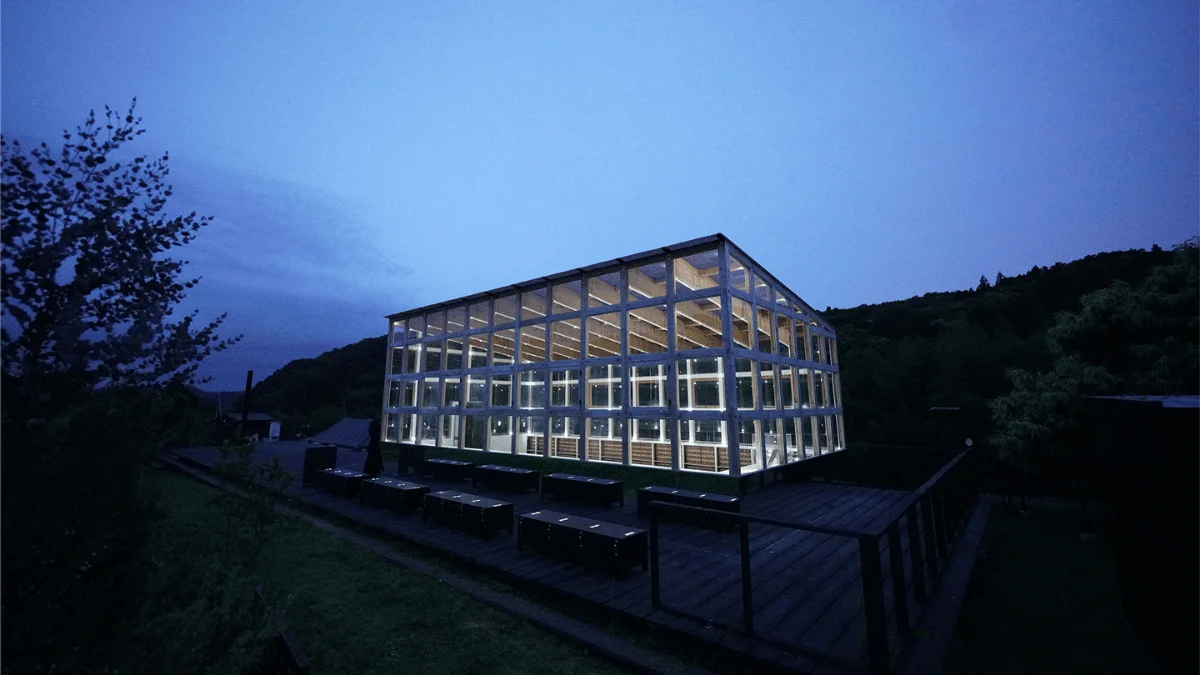
In Japan, an experimental structure that looks like a greenhouse is lit up at night using an unconventional energy source: small cells containing soil and compost.
The project, developed by Japanese inventor and designer Satoshi Nakagawa, founder of Tripod Design, explores how the small amounts of energy present in the environment can be harvested and harnessed to power low-energy devices.
The installation is called KU-AN and works as an experimental space for the Micropower Collection (MPC), a technology developed by Nakagawa to capture small amounts of natural electricity from different sources in the environment.
1,500 small cells producing electricity
KU-AN integrates around 1,500 cells into its wooden structure. These cells contain earth and compost and use carbon electrodes to capture the small electrical currents associated with the processes occurring within the material.
Separately, each cell generates a minimum amount of energy. Altogether, however, the system reaches around 2 watts, enough to power the energy-efficient LED lights illuminating the installation.
The scale is important: KU-AN does not intend to generate enough electricity to supply a home or compete with technologies such as solar panels. Its proposal is precisely to take advantage of amounts of energy that would normally go unnoticed.
In addition, by not relying directly on solar radiation, the system can continue to harvest energy at night as long as the necessary conditions are maintained inside the cells.
What would such low energy be used for?
Therein lies one of the most interesting possibilities of the concept.
Nakagawa argues that the technology could be used to power sensors, IoT devices and energy-efficient monitoring systems, especially in places where replacing or recharging batteries is often impractical.
More than a new source of electricity on a large scale, KU-AN functions as a demonstration of another way of thinking about energy: instead of just asking how to produce more, it explores how to harness the small amounts of electricity that already exists naturally in our environment.
A box of dirt won’t power a city. But it may be able to power a sensor that without the need for a conventional battery.
Source: Tripod Design


