



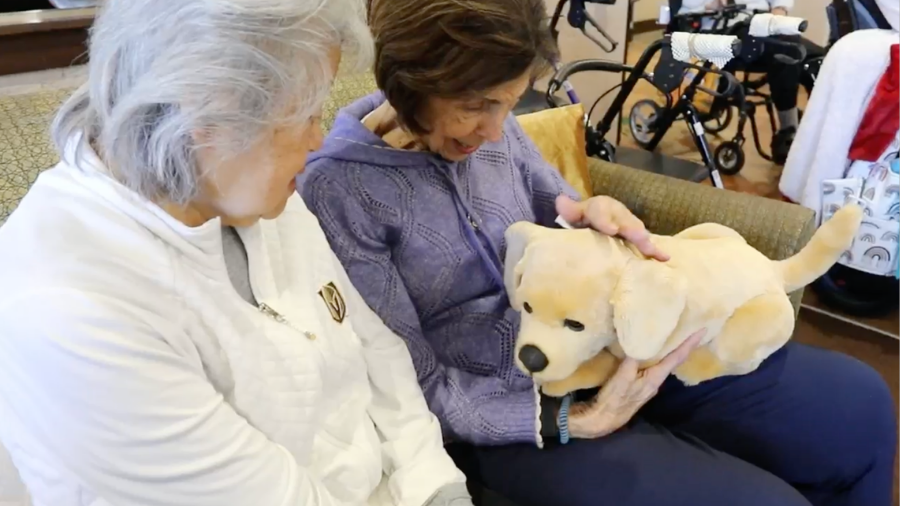
Pets are companions and contribute to the emotional well-being of its owners, but not everyone can have one. For example, elderly individuals, patients with dementia or Alzheimer’s, and those living with developmental disorders, may not be able to care for a pet.
That’s where Tombot fits in.
Tombot is a hyper-realistic robotic puppy designed to mimic not only the appearance of a dog, but also its behavior. The robotic dog responds to touch, moves ots tail, emits sounds, and generates emotional interaction with its user. It does not seek to replace a real pet, but to replicate its benefits without the real responsibilities involved in caring for it.
But the most relevant aspect of the dog lies not in the technology used to create it, but in its origin.
Tombot was launched based on a personal experience. Its creator had to separate his mother, diagnosed with Alzheimer’s, from her dog, a decision that intensified her feelings of loneliness. This gave way to a simple, but powerful, idea: To recreate that emotional bond.
The result is a “dog” that does not make a mess, does not age, and does not die, but that achieves something key: companionship.
This paves way to a bigger conversation: Are we entering a time in which emotions, such as affection, can be designed? In which emotional experience can be replicated, optimized, and adapted to the limitations of the user?
The question is no longer just technological:
Are we looking at an empathetic solution… or a way to replicate something as delicate as human emotions?
Source: https://tombot.com/


