



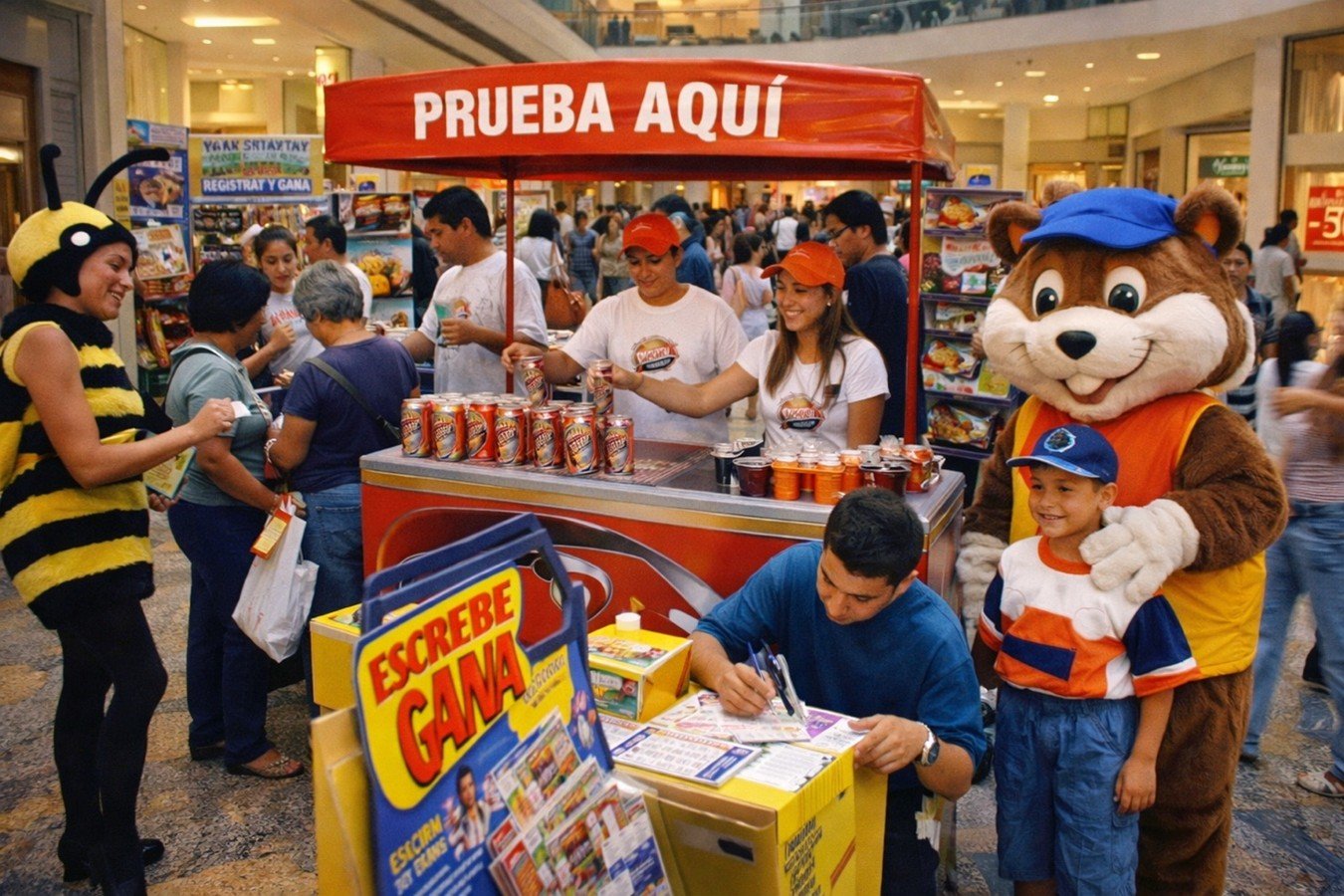
In 2000, The Below-the-line (BTL) marketing mainly consisted of:
- Point-of-sale activations
- Tastings and samplings
- In-person events
- Street marketing
- Physical POP material
It was 100% offline, difficult to measure accurately, and its impact depended heavily on physical traffic and subsequent recall.
BTL in 2026
Today, BTL is much more hybrid and strategic:
- Amplified physical activations on social media
- Immersive experiences (AR, VR, interactive displays)
- Integration with data and CRM
- Real-time measurement
- Influencers and creators as part of activation
- UGC content generation (user-created content)
Now the goal is not only to impact those who are present, but to multiply the experience digitally.
The big difference
In 2000, BTL was looking to make an impact.
In 2026, BTL seeks to generate experience, conversation and data.
BTL no longer competes with ATL: it is now part of an omnichannel ecosystem where every activation must be “postable,” measurable and scalable.
Tomilli


