



Traditional marketing does not always speak to the real world; it seeks “ideal” market groups, mirroring collective desires. At the center of the strategy are hyperconnected consumers, with high purchasing power and homogeneous aesthetics.
These segments not only represent the engine of immediate consumerism, but also the standard of “success” that brands project; they are the chosen ones of the corporate narrative.
Who are really these “ideal” consumers that almost all brands seem to target? Generally, marketing strategies end up concentrating on profiles that are similar to each other:
- “DINK” (Double Income, No Kids): Dual-income couples with no children. They have a budget for travel, technology, andluxuries.
- The “Aspirational” upper-middle class: Urban professionals seeking status. They consume brands that project success and a sophisticated lifestyle.
- Urban “Tech-Savvy”: Hyperconnected young people from major cities. They adopt trends fast and constantly shop online.
- The aesthetic and functional standard: young people, without physical disabilities, and who fit Western beauty standards.
And what about groups that almost never appear in campaigns, products, or brand conversations?
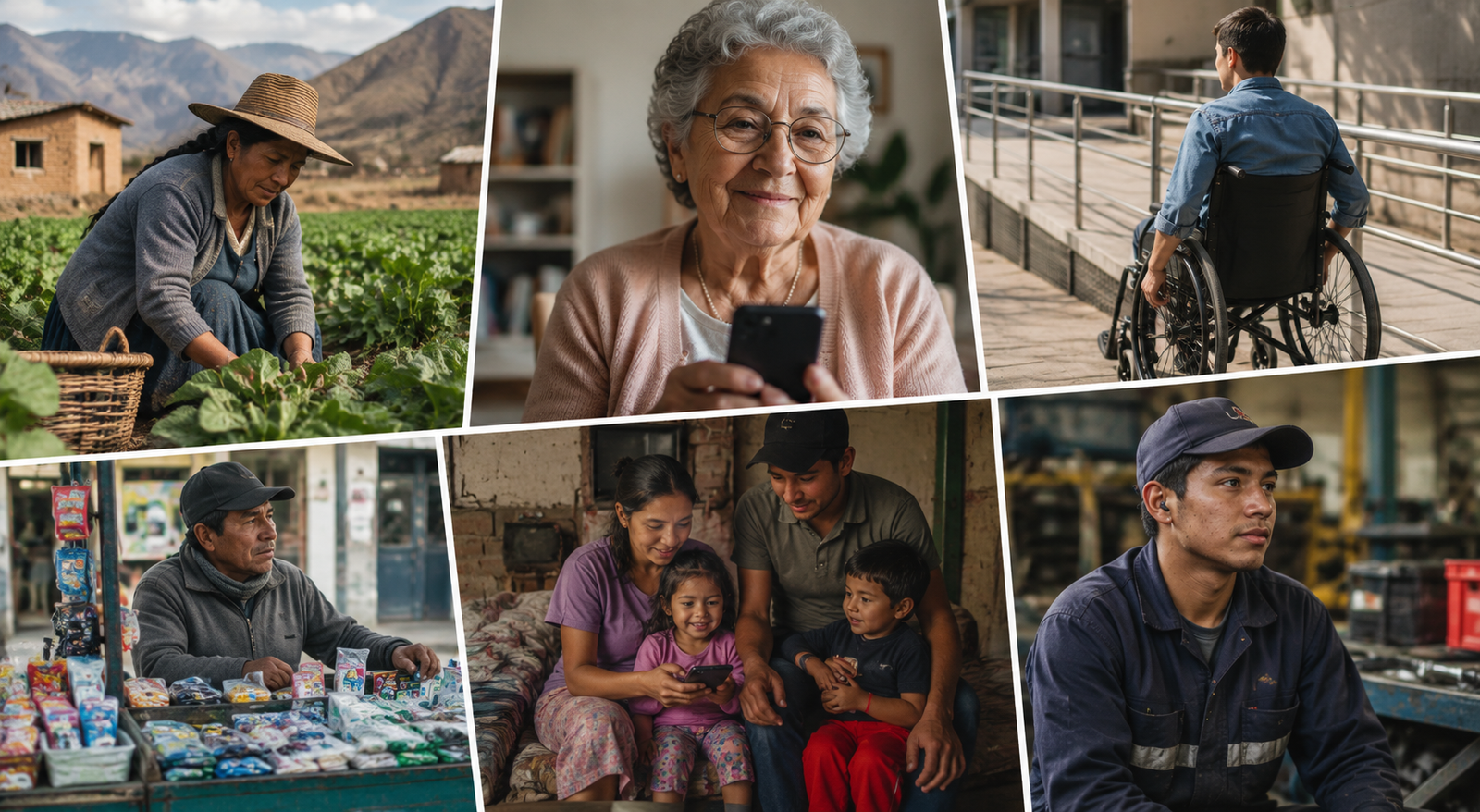
Beyond the traditional algorithms and mass campaigns, there is a vast market that traditional marketing often overlooks. By ignoring these realities because of geographical, economic or aesthetic biases, marketers not only make a mistake in not adding them to their financial calculation, but also stop delving into their real contexts and needs:
Markets that are often overlooked include:
- Rural and Agricultural Populations: Ignored due to the lack of logistical infrastructure or connectivity. It is mistakenly assumed that they do not consume premium products.
- The “Silver Economy” (Senior Adults): Consumers of the elderly. Marketing usually portrays them only associated with health or pensions, forgetting that they have free time and purchasing power for leisure, travel and adapted technology.
- Non-normative bodies and functional diversity: People with disabilities or that do not fit into traditional beauty standards. Brands rarely design products, packaging or advertising accessible to them.
- The base of the economic pyramid: Low-income sectors. Traditional marketing ignores them due to their low individual purchasing power, forgetting the huge market volume this sector represents.
It is believed and taught that marketers try to understand the world through the eyes of their audience, but is this really true? Shauna Moran, analytics leader at GWI, and author of the report “The Groups Forgotten by Marketers, and How to Reach Them,” explains that marketers often do not look at the world as it really is, but rather, through their own experiences, privileges, and social contexts. This leads to campaigns being built from a limited perspective, where certain urban, young and aspirational lifestyles are constantly represented because they are the environments that those who create advertising know best. As a result, huge social groups are left out of brand conversations, not because they don’t exist or don’t consume, but because they are rarely represented at the table when creative and strategic decisions are made.
In fact, the report by GWI mentions that many brands continue to develop narratives focused on urban and digitized consumers, while rural realities, older adults, people with disabilities or low-income sectors remain underrepresented in advertising and product design.
In the end, making marketing more inclusive is not an act of charity! It’s good business. As a
brand, it’s a matter of strategic intelligence and cultural empathy. For this reason, it is vital to take into account these forgotten niches; the industry should give itself the opportunity to design campaigns that are not located only in “urban desks” and start walking in a real, human, sensitive territory without so much “perfection”. This implies decentralizing research budgets, designing products together with forgotten communities, but which enrich and redefine the concept of “profitability.” Also, if we think about the future, the brands that do not evolve, question and include these social groups, will risk losing relevance within an increasingly diverse and conscious society.
Source: GWI / “The Groups Forgotten by Marketers, and How to Reach Them,” by Shauna Moran.
Tomilli provides global content about trends, innovation, and marketing.


