



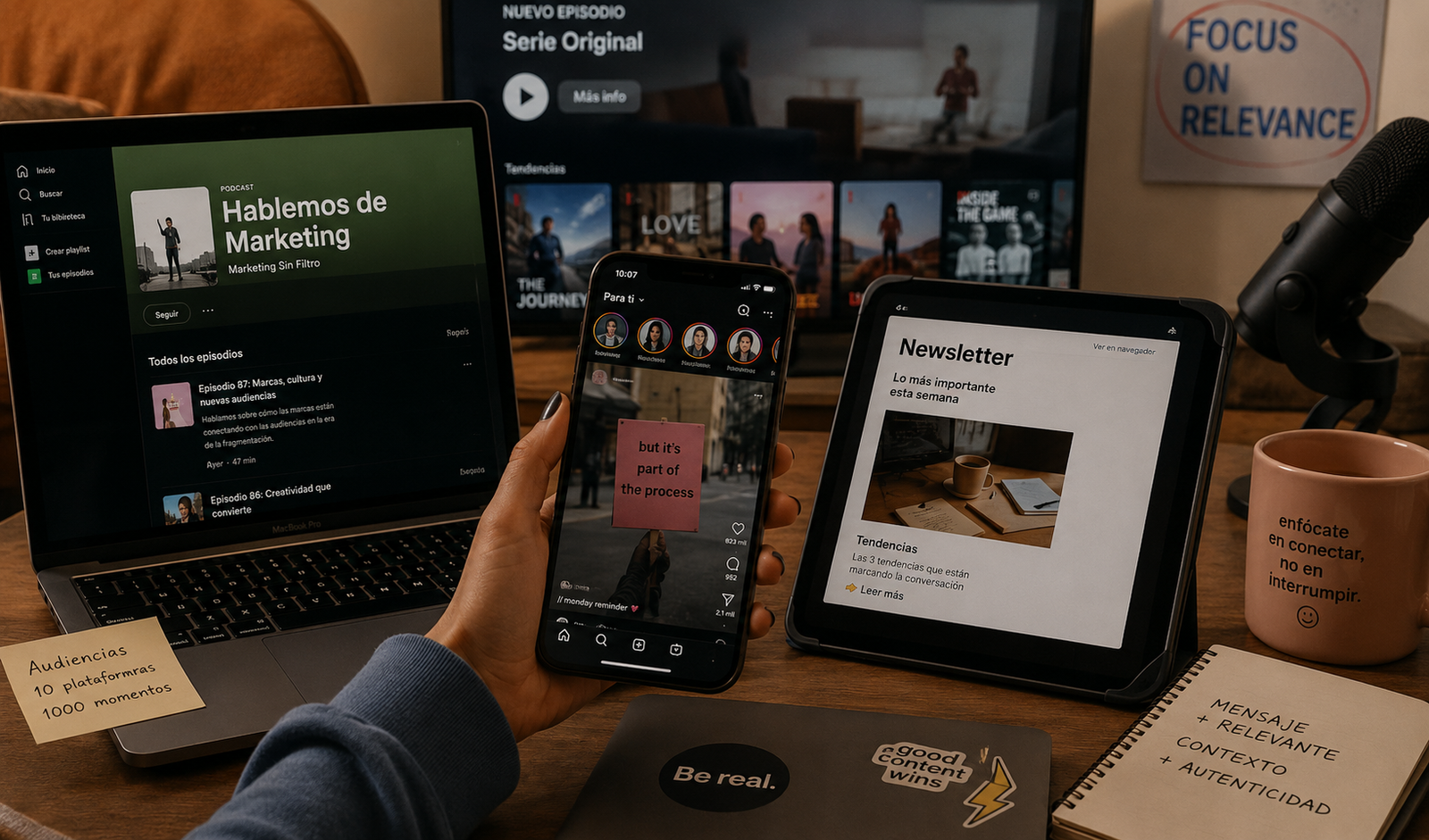
The media landscape is fragmented, and it’s changing the way we consume content. According to Nielsen, the same person will listen to a podcast on the way to work while interacting with outdoor ads, check social media throughout the day, and then stream a series at night while simultaneously engaging with digital communities. Media consumer’s attention is no longer concentrated in one place, and that is forcing brands to completely rethink the way they connect with audiences.
Nielsen clarifies that this does not only mean that more media exists, but that audiences are also actively dispersing their attention between multiple spaces. Data from The Gauge reveal that traditional television and cable together represent 44.2% of television consumption time in the United States, demonstrating that consumption is increasingly distributed amongst streaming, social networks and new digital formats.
Faced with this scenario, massive, and generic campaigns are losing strength. According to Nielsen, brands need to understand their audiences’ interests, behaviors, and habits in order to create better strategies. This involves integrating multi-channel approaches, personalizing content, and adapting messages to the natural language of each platform, whether that be TikTok, newsletters or specialized podcasts.
Finally, the report shows a cultural shift in the way people consume content. Today, competing doesn’t just depend on the number of platforms on which a brand is featured, but on understanding how to capture attention in environments where everything happens at the same time. In the midst of this dispersion, relevance and authenticity are becoming the most valuable assets for brands.
Finally, the report reveals a cultural shift in the way people consume content. Today, competing doesn’t just depend on appearing on more platforms, but on understanding how to capture attention in environments where everything happens at the same time. In the midst of this dispersion, relevance and authenticity are becoming the most valuable assets for brands.
Source: Nielsen
Tomilli provides global content about trends, innovation, and marketing.