



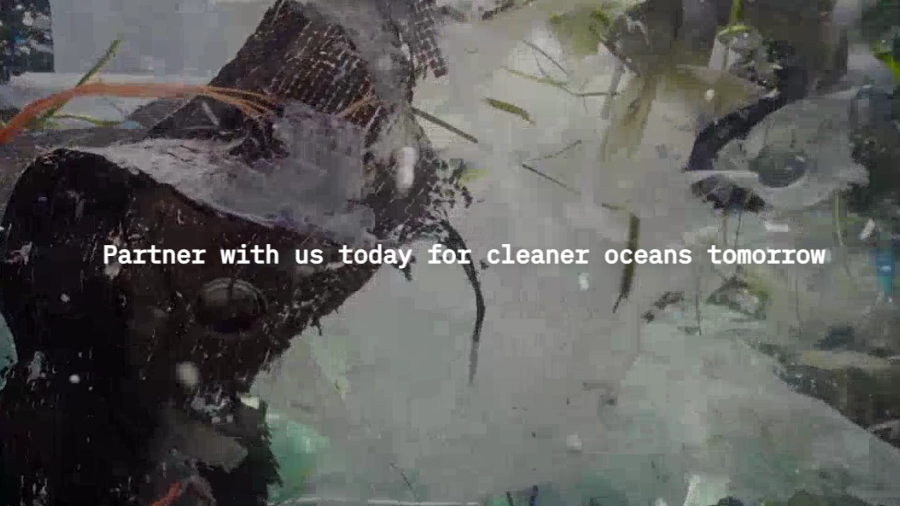
Ocean pollution is a reality that, while not overlooked, still needs more support in order to create greater personal responsibility and knowledge. Waste has a catastrophic impact on the sea, because it can persist for decades, continuously degrading into microplastics.
Seabin is a floating container that acts as a waste collector on the surface of the sea. It works with a submersible pump that filters up to 1.3 million liters of water, capturing plastics, microplastics, fibers, oils and fuels in a removable bag with capacity up to 20 kg. It operates continuously, 24/7.
But its value is not only in what it collects, but in what it generates. The system works under a four-pronged logic:
- Identifying critical points of contamination
- Constantly monitoring environmental technicians that collect and classify waste
· Data processing by marine scientists and analysts
· Participation of volunteers through citizen science programs

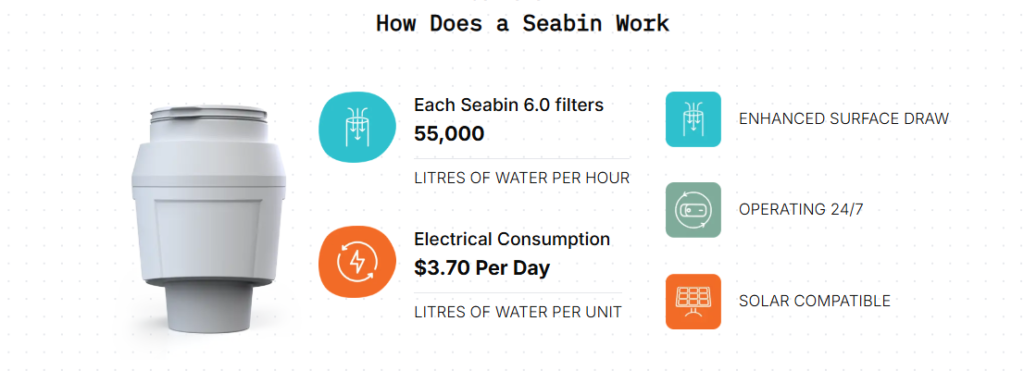
How does Seabin work?
Each Seabin 6.0 filter
Filters 55,000 liters of water per hour
Electric consumption
$3.70 per day
Liters of water per unit
Image of improved ocean surface
operates 24/7
compatible with solar energy
This is where the narrative changes: Cleaning up the ocean is just the first step. We need data. Each piece of waste collected is converted into information that allows us to understand consumption patterns, waste origin, and environmental responses. This data can scale and be used to put real pressure on industries that rely on single-use plastics.
This data is also used to support new and existing policy legislation. The information is available to the public, helping to raise awareness among the population so as to avoid further pollution.
Seabin demonstrates something key: environmental innovation is no longer only measured in visible impact, but also in the invention’s ability to turn problems into actionable information.
Cleaning up the ocean matters, but understanding how/ why it gets dirty can lead to a more durable solution.
Source: https://seabin.io/how
Tomilli


