



Mexico City, April 8, 2026 –
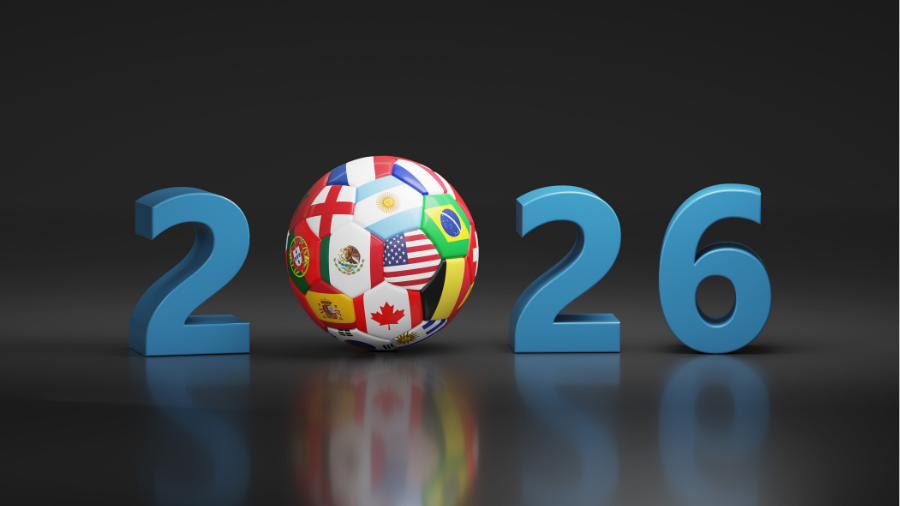
As the 2026 World Cup approaches, an audience behavior analysis confirms that the global sporting event will break audience records.
Understanding how attention evolves, and when it reaches its peaks, will be key for brands to identify how and when to connect with audiences, so as for messaging to have greater relevance.
Seedtag, a global Neuro-Contextual advertising company, is presenting findings from the use of a platform powered by Agentic AI – called Liz Agent –
that is capable of understanding objectives, processing data, and executing tasks autonomously with its own Neuro-Contextual Intelligence engine; designed to discover audience insights and transform data into strategic decisions. One of the main findings is a “contextual neuro peak” about 45 days before the start of the tournament, driven by milestones such as squad lists, fixture adjustments, team shirt presentations, and predictions and analysis based on friendlies.
This moment marks the beginning of a growing volume of traffic that must then be sustained over time.
“The 2026 World Cup is consolidated as a cultural experience that begins long before the start of the tournament, and that will extend beyond its finale. In Mexico, a host country, this dynamic will be intensified, as, according to our analysis, more than 70% of the Mexican audience is interested in the event and lives it as an opportunity to meet, share, and, of course, consume. This broader and more sustained approach redefines the way we understand attention: it ceases to concentrate on specific moments and begins to be built as a process, in which the context – from the build-up, to the tournament milestones– allows us to identify when and how to connect in a more relevant and consistent way,” says Manuel Morales, Country Manager of Seedtag Mexico.
The analysis also shows that traffic climbs organically in the months before the World Cup, and that interest remains high even on days without key matches. This suggests that attention responds to broader and more ongoing consumption patterns, with a marked concentration on encounters.
Likewise, the World Cup expands into multiple content areas.Categories like Food & Drink and Travel and Technology are an active part of the conversation, reflecting how the event permeates different aspects of everyday life, from planning gatherings to experiences and associated products. In turn, the data show that interest is not only greater, but longer-lasting, consolidating consumption patterns that demonstrate digital loyalty throughout the year.
In this context, key moments that structure the global conversation are identified: The inauguration as a point of maximum anticipation, the matches as instances of greater emotional and social consumption, and the final as the moment of maximum visibility.
“In this scenario, the differential for brands lies in their ability to really understand their audiences, the contexts in which they can generate relevance, and the interests, emotions, and intentions they can trigger. Only in this way, is it possible to build authentic and scalable ties that translate into concrete results for the business,” concludes Morales.


