



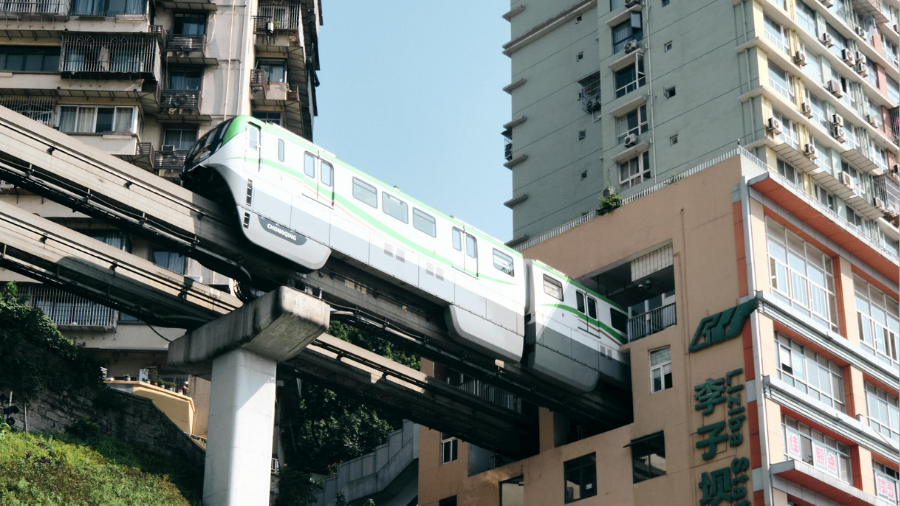
Some cities expand horizontally, others vertically, and, in others, monorail tracks are built right through residential buildings. Chongqing’s unique layout reflects its geography. Located on mountainous terrain between the Yangtze River and the Jialing River, it was virtually impossible for Chongqing to expand horizontally, so, the city grew up, down and within itself.
One of the most surprising examples is the Liziba station, where a monorail runs through a 19-story residential building. From the outset, the building was designed to have a train running through it, meaning that its architectural design included sound insulation and vibration control systems to prevent the train from affecting the residents.
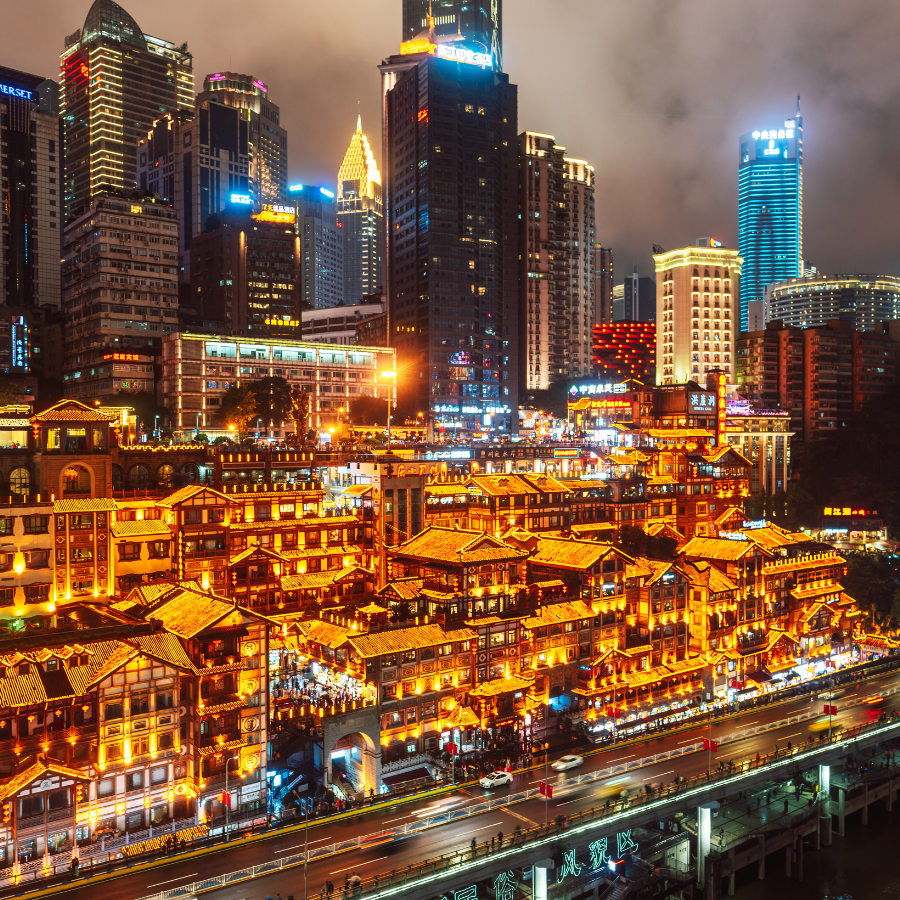
This city development logic is also reflected in Hongyadong, one of Chongqing’s most emblematic spaces. From the street it looks like a four-level building, but from the back you’ll see its eleven floors adapted to the slope of the mountain. Today, it houses restaurants, shops and viewpoints.
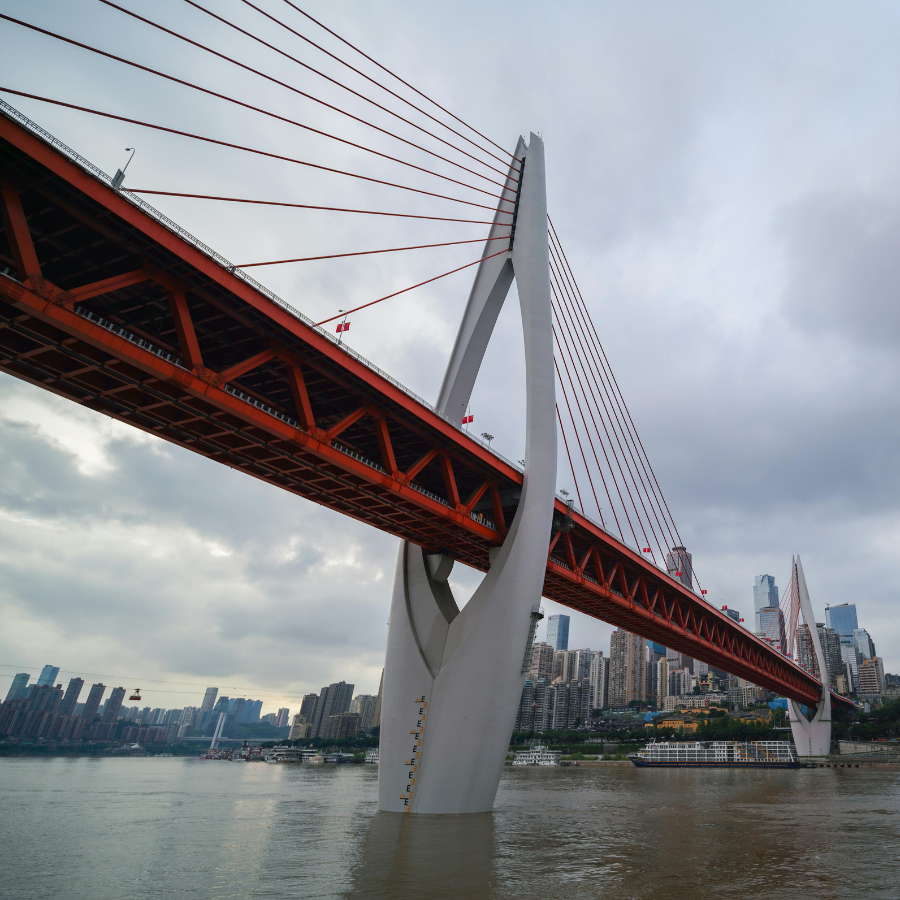
Chongqing’s urban complexity is also evident in the Qiansimen Bridge, which not only connects parts of the city, but functions as an additional urban layer for pedestrians to move between districts located at different heights.
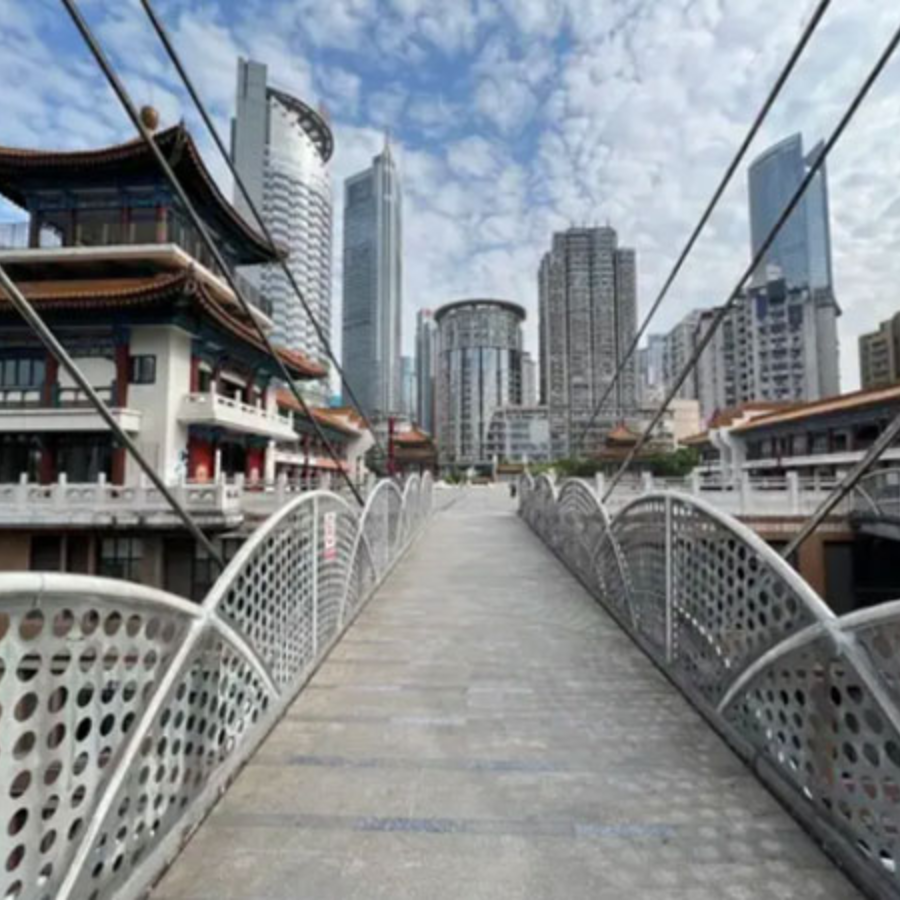
But perhaps the most interesting part of the city is the Kuixing Tower in the Yuzhong District. Due to the mountainous topography, a person can enter through a door located at street level and find themselves on the 22nd floor.
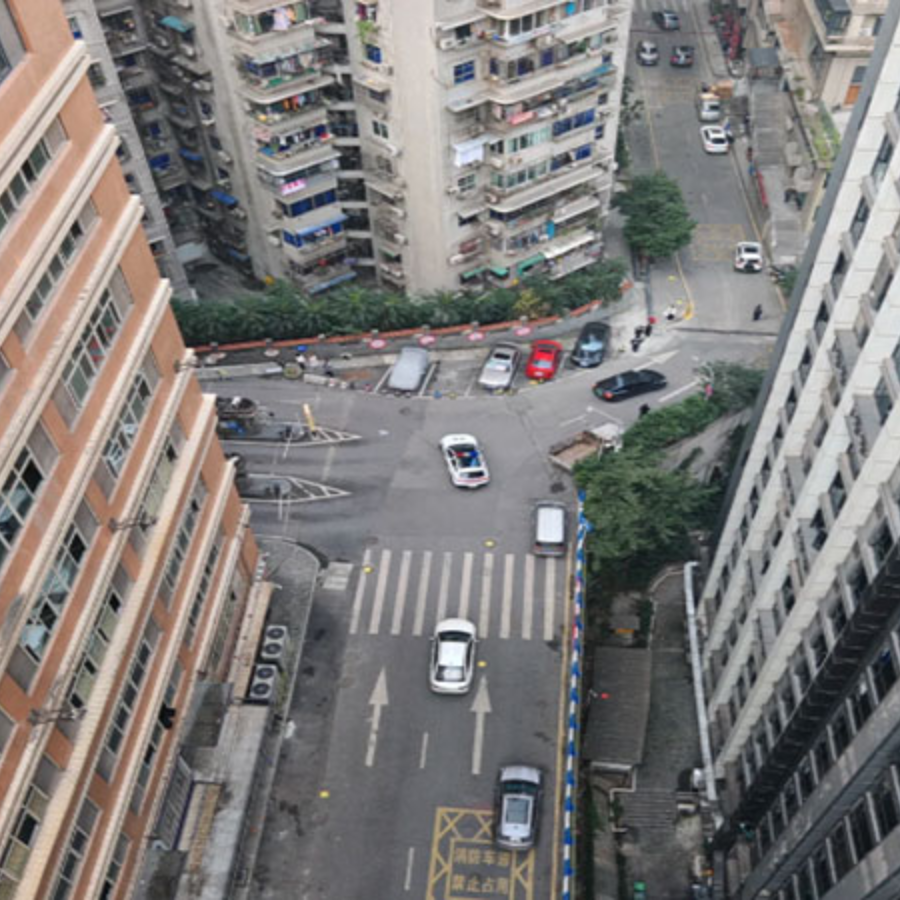
Source: Top China Travel