



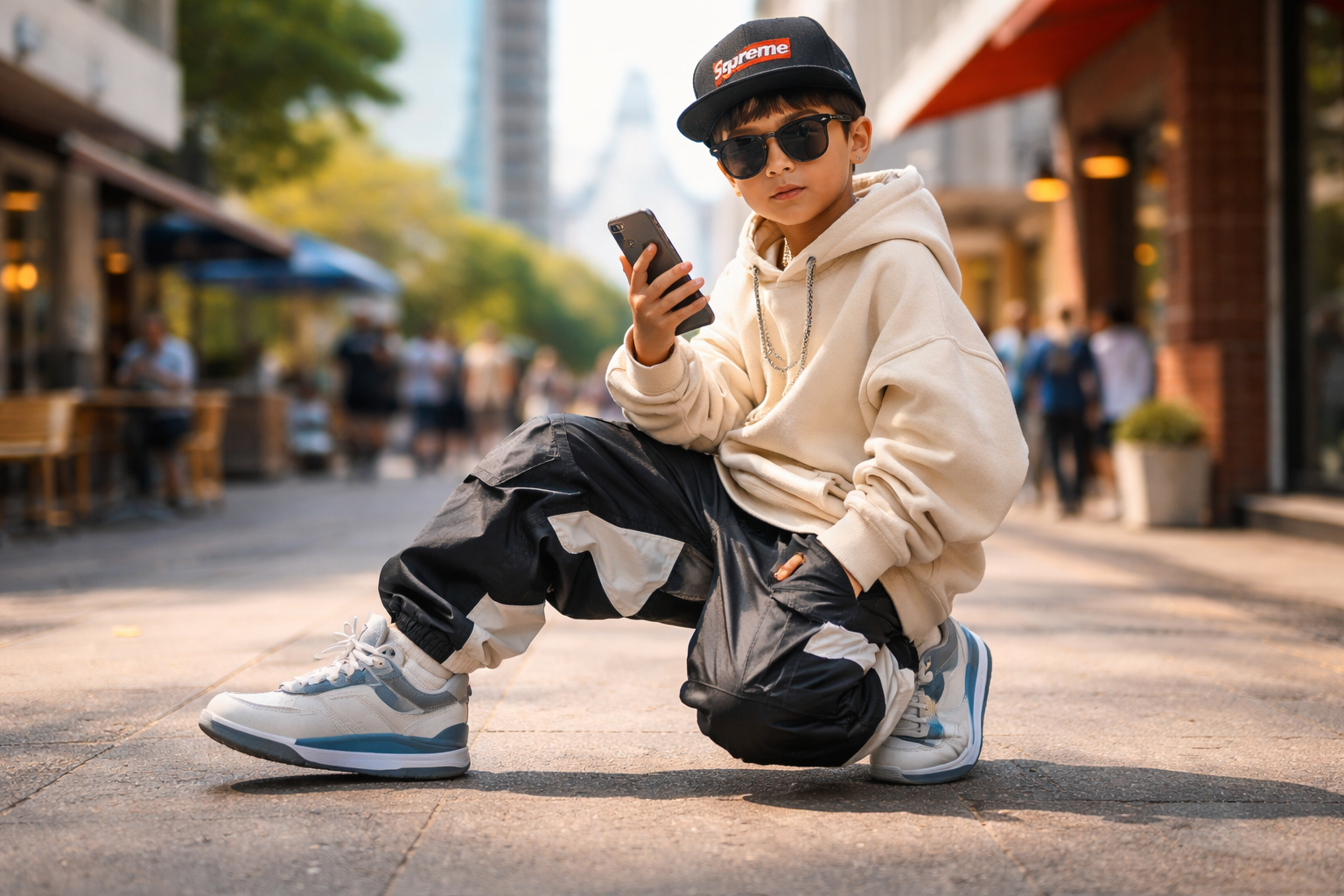
Children’s streetwear has taken on a culture of its own, and it is no longer just an adaptation of adult fashion.
Children’s clothing used to be just comfortable garments for kids play in, but they are now becoming identity choices: oversized hoodies, limited edition sneakers, and functional cargo that reflect style, attitude, and identity. Now, children not only wear trends, they lead them, driven by an urban aesthetic influenced by hip-hop, skateboarding, and the digital realm.
Social networks have catalyzed this phenomenon. Platforms like Instagram and TikTok have turned stylish kids into content creators, accumulating millions of views under hashtags like #KidStreetStyle or #MiniHypebeast.
Celebrities such as Pharrell Williams, Kim Kardashian and Beyoncé have contributed to this phenomenon, by normalizing children’s streetwear as part of their kids’ lifestyle, amplifying its global impact.
The growth of this trend is also redefining the industry. Brands like Nike, Jordan and Adidas have launched mini versions of their most iconic models that sell out in minutes, while luxury firms like Off-White or Palm Angels have developed complete children’s collections. Then there is the “mini-me” phenomenon, with parents and children wearing identical versions, and the rise of “kidfluencers,” that are transforming the way children’s fashion is consumed.
Per usual, aspiration, visibility, and exclusivity play a key role in this phenomenon.
Tomilli


