



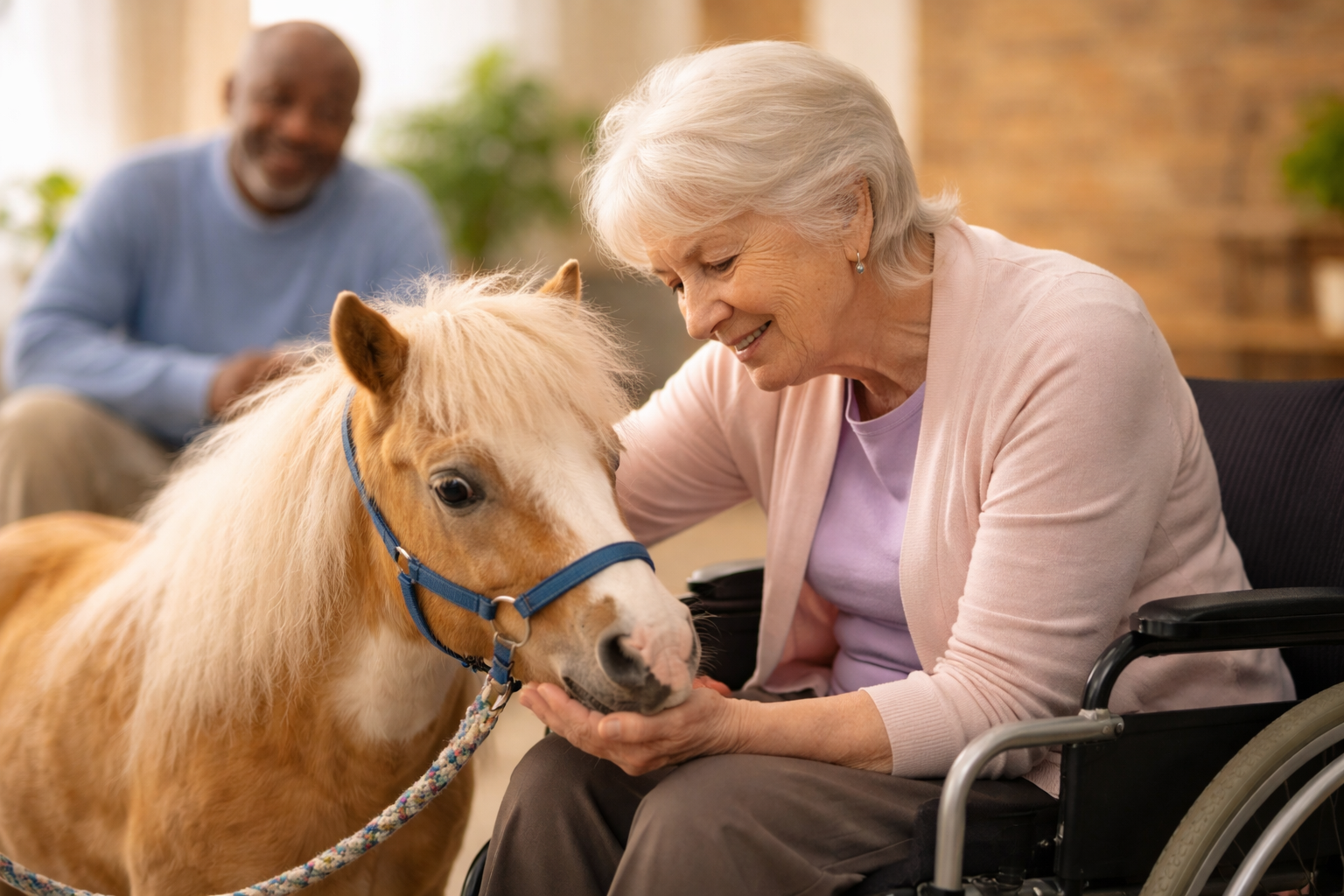
At a time in which loneliness and mental health have become greater societal challenges, especially among the elderly, animals are taking an unexpected, but deeply effective, role as therapists.
An example of this, are the mini horses Pearl and Aiden, who visit residences in New York, bringing company, excitement, and connection to those who need it most. Beyond tenderness, these interactions generate something deeper: a bond that breaks isolation and awakens forgotten emotions.
Animal-assisted therapies are based precisely on that: the ability to generate affective connections that directly impact emotional well-being.
When interacting with an animal, the brain responds positively, reducing stress, anxiety, and heart rate.
This type of therapy not only benefits the elderly, but also those living with conditions such as depression, autism, or cognitive impairment, making animal therapy an increasingly relevant tool within comprehensive care.
The benefits go beyond emotional stimulation. In the case of therapies such as equine therapy, contact with horses stimulates coordination, balance and muscle tone, while other interventions help improve memory, language, and attention.
The simple act of caring for, or interacting with, an animal strengthens self-esteem, fosters independence and develops social skills, especially among those who have difficulties with social interactions.
Sources:
Good Good Good
Sunrise Medical
Tomilli


