


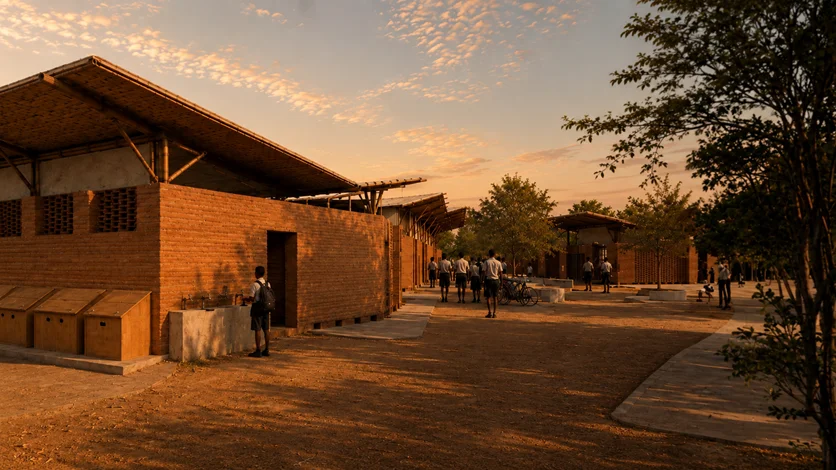
Cielo Remigio stood out at Kaira Looro 2026 among nearly 1,000 proposals from 125 countries, becoming the only Peruvian representative to reach the global podium.
Cielo Remigio, a student at the Universidad de Ciencias y Artes de América Latina (UCAL), became the only Peruvian finalist in the Kaira Looro Architecture Competition 2026, one of the world’s leading humanitarian architecture competitions. Her proposal earned a place on the global podium among nearly 1,000 projects submitted by participants from 125 countries.
Organized by the Balouo Salo Foundation, the competition allocates 100% of the funds raised to the construction of healthcare, education and clean water access projects in Sub-Saharan Africa, a region where more than 500 million people lack basic infrastructure.
The project was developed at UCAL as part of the Architecture and Design Studio 5 course, under the guidance of architect and professor Jean Carlo Santolalla. The proposal stood out to the international jury for its spatial balance, respect for the surrounding environment and technical feasibility in addressing the real needs of the territory.
“Architecture should be understood as a direct tool for solving real problems and protecting human dignity. Developing this project alongside Professor Santolalla allowed me to apply a practical approach and demonstrate that, from Peru, we can design high-impact solutions for vulnerable communities anywhere in the world,” said Cielo Remigio.


Evaluated by Leading Figures in Global Architecture
The Peruvian student’s work was evaluated by a jury featuring some of the most prominent figures in contemporary architecture, led by Japanese architect Kengo Kuma, designer of the Tokyo 2020 Olympic Stadium, and British architect Sir David Adjaye, architect of the Smithsonian National Museum of African American History and Culture in Washington, D.C.
They were joined by internationally renowned architects including Benedetta Tagliabue, Manuel Aires Mateus and Giancarlo Mazzanti.
Reflections on Peru’s Infrastructure Challenges
Commenting on the achievement, José Ignacio Pacheco, Dean of UCAL’s Faculty of Architecture and Design, said the recognition also opens an important conversation about Peru’s current reality. Recent results from the World Competitiveness Ranking (IMD/Centrum PUCP) place Peru at its lowest level in two decades — 60th out of 70 countries — driven in part by critical gaps in infrastructure and urban integration.
“Urban infrastructure design is a strategic discipline that contributes to the regional urban development Peru urgently needs. The fact that a Peruvian student has earned international recognition demonstrates that the country has both technical rigor and talent; the challenge is to apply that same vision to our own reality,” said Pacheco.
“Faced with the infrastructure crisis and repeated announcements of megaprojects that fail to materialize, we need to plan the development of urban centers and land use more effectively. Peru should look to development models such as Mexico’s historic ‘100 Cities Program,’ which prioritized public infrastructure and quality of life in mid-sized cities. Whether designing a community center in Africa or planning the growth of our own regions, the principle of architecture remains the same: ensuring dignity and inclusion,” Pacheco added.
Alongside Cielo Remigio’s recognition, UCAL also highlighted the work of students Adriana Gavilán, Micaela Ayala and Lucero Celis, who represented the university in the international competition, further strengthening the presence of young Peruvian talent in socially driven design projects.

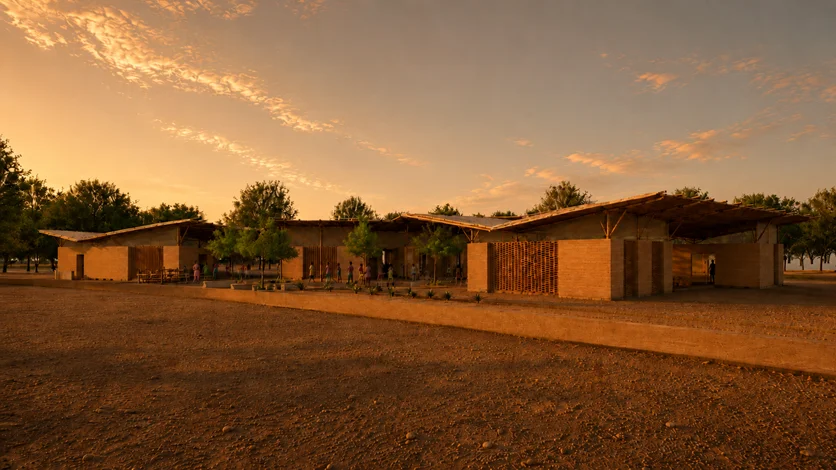
More information about the project is available on UCAL’s social media channels.