



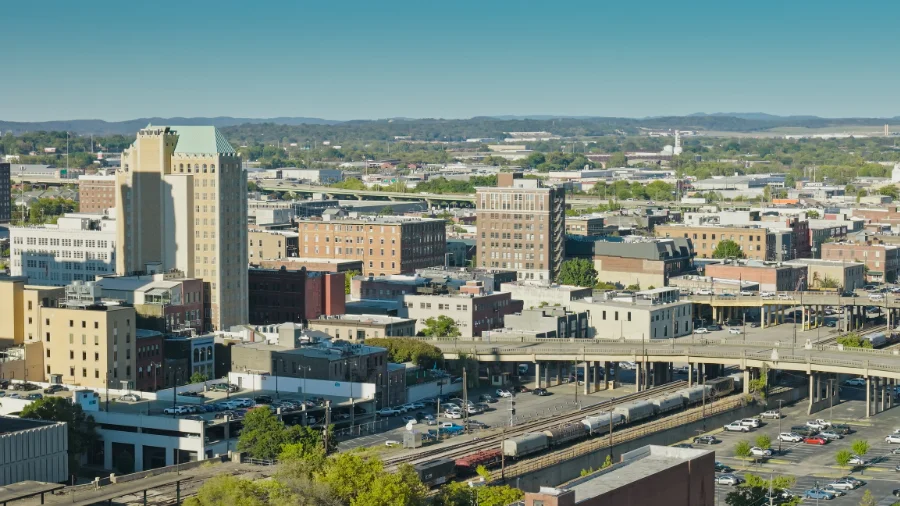
The United States not only has one of the world’s largest populations; it is also full of old, abandoned buildings. Shopping centers, factories, and offices that were once bustling with activity, are now empty. However, this reality makes space for a new opportunity: transforming these spaces into housing units; responding to a growing need for access to affordable housing, which is becoming increasingly limited in cities across the US.
One example of this is The Arcade, in Providence, Rhode Island, the oldest shopping mall in the country. After 188 years in operation, it stopped functioning as a retail space and was converted into 48 small apartments. Today, for around US $550 dollars a month, young professionals can live in a historic building that maintains commercial spaces on its ground floor, integrating housing, community, and local economy all in one place.
Another example of this is a case of a former Japanese rice cracker factory in Los Angeles, California, that was transformed into an affordable housing complex for about 200 people. The project, known as Umeya, not only responds to the housing shortage – in which there are only 35 housing options available for every 100 low-income people –it also promotes building preservation.
The movement is also being driven by recent legislative changes. In 2026, the Washington State Department of Commerce reported in its Legislative Update Bulletin, that it has passed new legislation aimed at addressing the housing crisis, allowing for residential development in commercial and mixed-use areas, as well as streamlining permit processes and expanding local financing tools for affordable housing projects.
This type of “adaptive reuse” is proving to be a real solution. It is not just about building more, but about understanding how spaces from the past can respond to the needs of the present and future.
Source: Washington State Department of Commerce. Boletín de los Planificadores: Actualización legislativa 2026.