



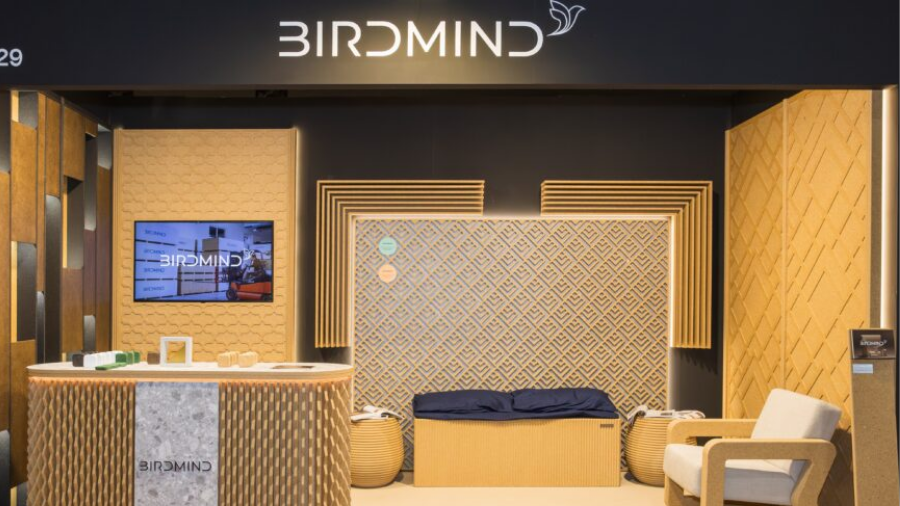
How one company turns agricultural waste into environmentally-sustainable furniture
Design is no longer measured just based on aesthetics. In an age in which consumers care about products’ environmental impact, the materials used are taking on new prominence.
Birdmind is a perfect example of this. The Spanish company has developed an innovative material made from rice husks that can be used to make furniture.
Birdmind was not intended to become a large business, it started as an artisanal project. It’s founder, David Camba, had experience in carpentry and design and more than 17 years of experience in the contract sector (retail, offices, and hotels). The idea arose from a key question: Why continue to cut down trees when there is an abundance of agricultural waste that could be used?
The project began in Camba’s garage, and, after years of research, he produced Birdmind’s first product: RiceTab.
RiceTab highlights the versatility of agricultural waste. Today, RiceTab is used in furniture, interior design, retail, and hospitality projects, demonstrating that sustainability can also be functional, aesthetic, and scalable.
Birdmind is currently experimenting with other waste such as oat shells, grape remains, and textile waste, expanding the potential of a circular material economy.
As global waste continues to grow, proposals like this show that waste can also become a raw material to produce new products.
Source: BirdMind
About Tomilli
Tomilli is a global media outlet specialized in trends, innovation, marketing, and creativity that connects data, culture, and ideas to analyze what is changing in the industry.