



AC Future’s Proposal for Mobile Housing
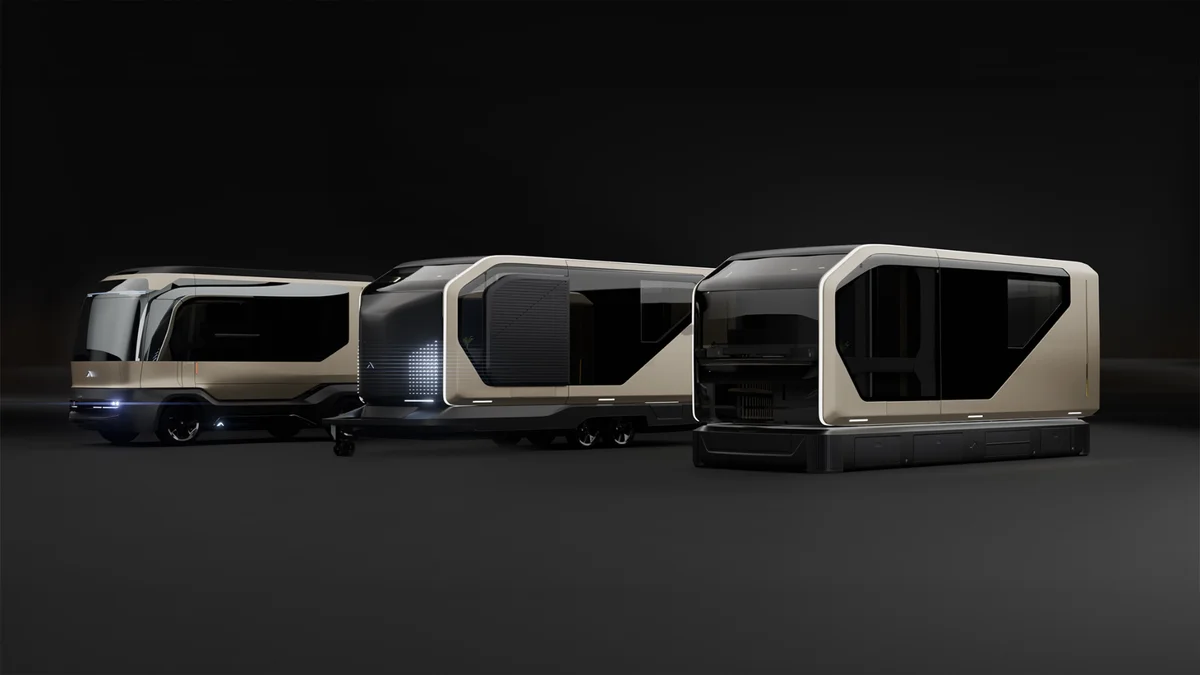
AC Future has ranked on the Tomilli Summit’s Golden List, a selection of the world’s 150 most innovative proposals. The company’s AI-Transformer Home project was selected for the way it reconceives mobile housing.
Mobile homes allow you to take your home with you, but they traditionally require coming to terms with limited living space. California-based AC Future wants to remove that limitation, with an innovation that the company says allows its units to expand from around 180 or 190 square feet to around 400, approximately 17 to 37 square meters.
With homeownership becoming less and less accessible to generations just starting out, the AI-Transformer Home provides consumers with an alternative housing option. AC Future sought to combine the benefits of a mobile home with an interior design primed for daily life.
In an exclusive interview with Tomilli, AC Future’s Chris Kerzich spoke about the project’s origins, and what would have to happen for AI-Transformer Homes to become a standard housing alternative. AC Future has also overcome its fair share of obstacles to get its ‘futuristic’ product to market, making its AI-Transformer Home not only innovative, but a masterclass in materializing creative ideas.
What was the initial inspiration for the AI Transformer Home?
Chris Kerzich: When we founded AC Future, in 2023, we identified a global affordable housing crisis and a sustainable housing crisis. Here in the United States, before the pandemic, the average home price was around USD $300,000, after the pandemic, the average home price rose to over USD $500,000, and in California, the average home price will soon reach USD $1 million. So, if you’re just starting your career, you’re essentially priced out of the housing market.
Younger generations are also looking for more flexible ways to live. So, what we’re seeing is this confluence of both the need for affordable and sustainable housing, and people’s interest in more experiential ways of living.

How did you arrive at the idea of creating a vehicle that could physically transform to provide a much larger living space? How did you get from A to B?
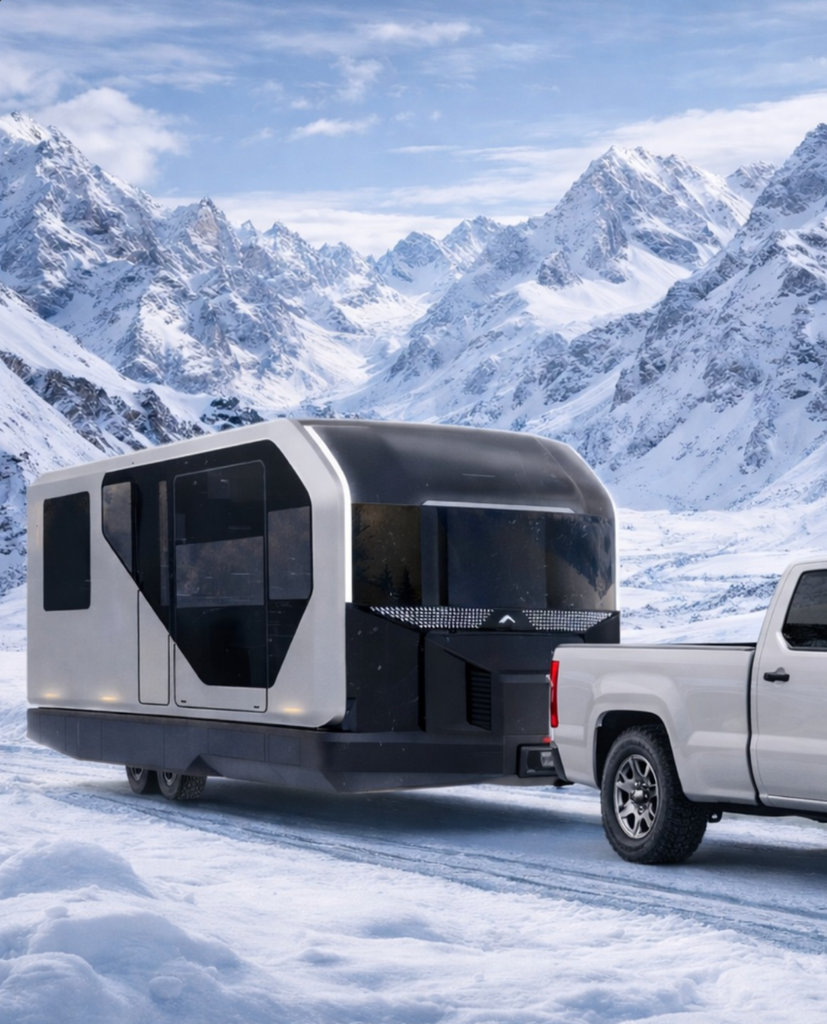
Chris Kerzich: What we realized is that, for any drivable recreational vehicle, you’re looking at about 100 to maybe 150 square feet. The challenge with mobile living, is that it’s no solution for the affordable housing crisis because most of the units are very small. So, what we’re creating is a unit that’s mobile, sustainable, and flexible in terms of how space is used. So, we asked ourselves: ‘why can’t we come up with something that goes beyond those boundaries?’ So, we came up with this transformer home concept, where, via our patented technology, our homes can transform and expand to up to 400 square ft.
What sets AC Future apart from a traditional RV? What category are you creating? How did you determine which features a mobile home needed to truly feel like a home, rather than being just a luxury RV?
Chris Kerzich: We want to ensure that our customers don’t have to compromise.
So, we engaged with Pininfarina, an Italian design firm that’s worked with Maserati, Ferrari, and a lot of luxury brands. We said to them ‘we believe that a home can be affordable and feel luxurious if it’s designed properly.’ Working with them, we came up with a suite of products with modern interiors.
Currently in traditional mobile living or recreational vehicles, you walk inside and you feel like you’re going back to the 1980s. It’s like wood paneling. While we’re trying to create a smart home integrated with AI that’s mobile.
What, if any, roadblocks have you run into along the way as you’ve developed this product?
Chris Kerzich: Even though we’re trying to push the boundaries, our products are still regulated so we still have to work within the boundaries of government regulations, not only in the US, but also in all the countries where we’re trying to bring our products to market.
We have three core products that are regulated as recreational vehicles. So, even though we don’t consider them to be competition for the traditional RV, they still are regulated as such.
We have the ADU, which is an Ancillary Dwelling Unit, which is essentially our trailer unit, but on a permanent base. In the US, we have a 6 million home deficit. And, so what’s happening is that people are looking to ADUs, units on a plot of land you turn that into a home for your aging parents or turn into an Airbnb. The ADU units will be regulated as homes. So, for us, the biggest challenge has been dealing with all these regulations both on the RV side and then on the home side as well.

What would need to happen for this type of home to move beyond being perceived as something futuristic and to really be seen as a truly viable alternative?
Chris Kerzich: We just have to get the product in front of them. We have the first drivable unit on the market. We are currently building up our trailer and we’re going to launch that, probably by the end of this year.
When we launch our first trailer, we will hit the road, go to a lot of different events. We’ll also try to ship a couple units internationally. The key is to get it in front of people.
That’s the main thing that we could do to break down the skepticism. We did that with our drivable: people loved it, we received a lot of awards, a lot of media. It’s getting in front of people and that’s when people start to believe that ‘this is something that is really going to transform the industry.’
And what are you doing to get potential customers to understand that AC future is the right choice for them?
Chris Kerzich: We are a tech forward company, but we also have to understand that the recreational vehicle mobile living industry is very established and has been around for over a hundred years in the United States. So, what we’ve decided to do, in the US in particular, is to partner with established RV dealers.
Why did we do that? Because one: the innovators dilemma. This idea that innovation in incumbent industries has to come from outside. So, for example, General Motors should be the electric vehicle company, right? Tesla Motors should not exist. And the reason being is that, in 1999, GM had a pilot called GM1, which was an EV pilot in Los Angeles. They were on the forefront of electric vehicles. Now, the customers loved it so much that, when GM pulled the pilot, a lot of the customers sued to keep their electric vehicles. And so, that led the way for Tesla to come to market and to take the market for electric vehicles.
So, if we want to grow, we need to partner with people that are already in the industry. A lot of these dealers are craving new technology because the old school RV industry hasn’t really innovated at all. Maybe they’ll change the color or add a flat screen TV, but there has not been any really, you know, breakthrough innovative products. So, we are partnering with established RV dealers and they love it.
Finally, what does the Tomilli Golden List recognition mean to you and to AC future?
Chris Kerzich: As we grow, and as we bring our product to market, one of the biggest things that we could do is to share the word internationally. There is a global affordable housing crisis. We have over 1 billion people that are underhoused globally.
And this award really is an honor, showing that there is a global interest in this product. It’s a great honor for our company, and our founder/CEO, Han (Arthur) Qin, was extremely excited when he heard that we made the Tomilli Summit Golden List.


