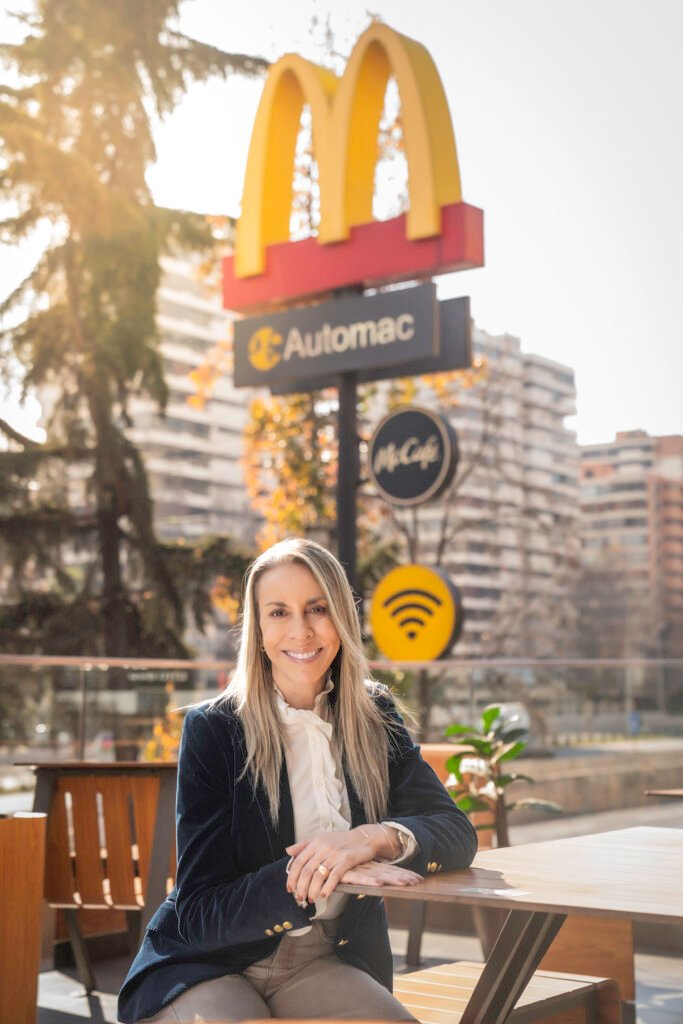



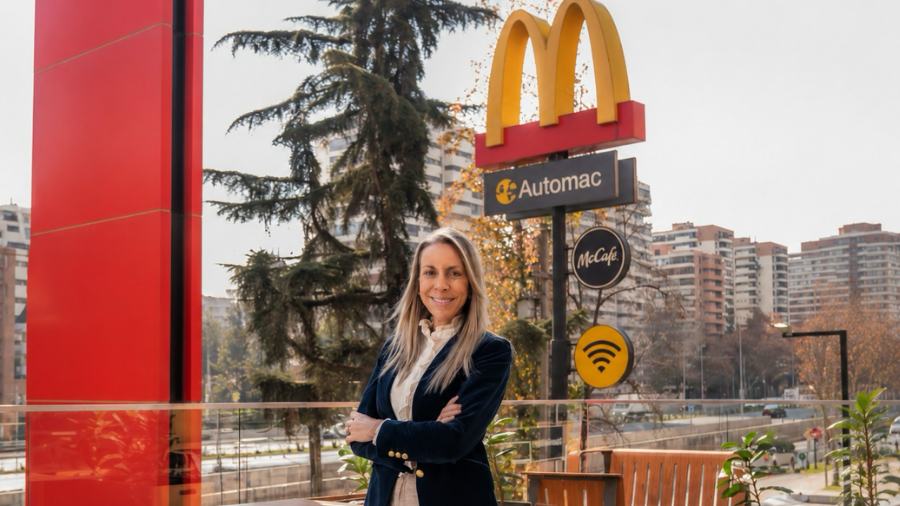
McDonald’s is one of the world’s most recognized brands. However, the fast-food chain still faces its marketing challenges. It’s no longer just about offering a good product at a reasonable price, but about consumer confidence, says Lorena Talma, Corporate Communications Manager at Arcos Dorados Chile.
Reputation, sustainability and innovation are becoming increasingly important when it comes to staying relevant with younger generations. In a conversation with Tomilli, Talma shared her insights into the ways a global brand can evolve without losing its identity, as well as why reputation is not just the responsibility of the communications area and what she considers to be the true role of Artificial Intelligence within organizations.
Relevance without compromising identity
McDonald’s relevance is based on an identity built over decades that transcends borders, says Lorena. She explains that, regardless of the country, the brand maintains elements that consumers immediately recognize, while also adapting its proposal to the particularities of each local market.
This combination of a global identity and national adaptation has allowed the brand to incorporate products and flavors specific to each country on their menus.
After more than a decade leading the communications area of Arcos Dorados Chile, Talma says that one of the biggest changes has been understanding that reputation is not just the responsibility of the communications area, but a shared responsibility.
“Reputation is part of the business. Probably 15 or 20 years ago it was an add-on. Today it is at the heart of the business.”
In her opinion, each employee contributes to the perception that people have of a company, from those working in restaurants to management teams.
New Generations are Looking for Brands with a Purpose
According to Talma, companies must listen more closely to new generations and connect with younger consumers, this means understanding that their purchasing decisions do not depend solely on the product.
“They are not satisfied with a good product. They want to know how responsible we are, how inclusive we are, and how we treat our employees.”
In her opinion, consumers’ purchasing decisions are not just based on product quality, but also on companies’ decisions, their commitment to diversity, youth employment, and the impact they have on society.
Talma adds that jumping on all the trends can end up weakening a brand’s identity. For her, the key is to identify initiatives that really strengthen the company’s mission. As an example, she pointed to McDonald’s historical link with sports and promoting children’s literature through the Happy Meal ®, where children can now choose between receiving a toy or a book.
“It’s how we connect with generations; we connect in many ways; we don’t connect only through food.”
To innovate is to anticipate changes
When talking about innovation, many people immediately think of technology. However, Talma proposes a different vision.
“Innovation is the ability to detect what is coming and to be able to adapt sooner.”
From her perspective, innovation is about understanding changes in the environment before they become a necessity for the business.
Regarding artificial intelligence, Talma believes that it will be an increasingly relevant tool for companies, although she insists that it will never completely replace human capacity to interpret contexts and make decisions.
“There is something that artificial intelligence is not going to have: that personal stamp that only you have according to your criteria and your sensitivity.”
For the executive, the true value will continue to lie in creativity, criteria and sensitivity.
A recognition that also represents a responsibility
Talma was recently recognized at Leading Women Chile 2025, a recognition that represents both an honor and a commitment, she says.
“It was a tremendous endorsement. More than a recognition, I feel that it is also a commitment because they are watching you and you have to be a reference for new generations.”
The executive highlights that having worked in different industries has allowed her to develop a broader vision of business, communication and leadership.
In addition, her participation as a WINA Festival judge allowed her to learn about projects from different countries and identify how innovation is transforming communication across sectors.
Beyond trends, artificial intelligence and new technologies, Talma sums up her vision for the future of brands as follows: relevance is not built with products, but through trust, listening to people, and evolving without compromising essence.